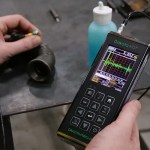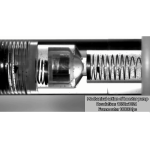




High-speed cameras are fundamental tools for analysing the weld pool and ensuring weld quality in various industrial sectors. Welding is a very fast process, and many dynamics, such as metal melting and joint formation, are difficult to observe at normal speeds. High-speed cameras, capable of recording thousands or millions of frames per second, make it possible to slow down the process and obtain a detailed and precise view of the phenomena occurring during welding.
Weld pool analysis
The weld pool is the liquid zone in which the filler metal melts and joins the parts being welded. The behaviour of the weld pool is crucial for joint quality, as irregular melting or uneven cooling can create defects. High-speed cameras allow precise observation of the pool dynamics, analysing how the molten metal moves, mixes and spreads within the joint. In particular, it is possible to see the exact moment when the molten metal comes into contact with the base material, as well as the behaviour of the pool during cooling.
Slow-motion analysis of the weld pool also helps detect fluctuations in the weld flow, which could indicate problems with temperature control, travel speed or filler material feed. By observing these phenomena in detail, engineers can optimise the welding process, preventing common defects such as porosity, inclusions or discontinuities in the joint.
Weld quality monitoring
In addition to weld pool analysis, high-speed cameras are also essential for monitoring the final quality of the welded joint. A quality welded joint must be free of defects such as cracks, porosity, slag inclusions or internal stresses that could compromise structural strength. Slow-motion footage makes it possible to observe rapid events, such as the formation of microscopic cracks during cooling, or the disappearance of filler material that could leave voids in the joint.
The cameras can also analyse metal solidification in the joint, revealing any irregularities in material distribution and crystalline structure formation. Detailed observation of these aspects makes it possible to optimise welding parameters, such as travel speed, arc temperature and pressure, to obtain a stronger and more uniform joint.
Advantages of high-speed cameras
Using high-speed cameras to analyse the weld pool and weld quality offers numerous advantages:
- Detailed observation: the cameras slow down the welding process and show every detail of the pool and solidification, improving understanding of the phenomena involved.
- Defect identification: slow-motion footage makes it possible to identify hidden defects, such as cracks or inclusions, that may not be visible during the normal process.
- Process optimisation: real-time analysis allows operators to adjust welding parameters (such as temperature, speed and material feed) to avoid defects and improve joint quality.
- Improved safety: early detection of defects reduces the risk of failure in welded joints, improving the safety of welded components in critical applications.
Fields of application
High-speed cameras are used in various industrial sectors to ensure weld quality:
- Automotive industry: welds are fundamental in the production of automotive components. High-speed cameras make it possible to monitor joint quality and ensure vehicle safety.
- Aerospace sector: welds on aircraft and spacecraft components must be perfect. High-speed cameras make it possible to check the quality of welded joints in real time.
- Energy industry: welds are used in the construction of power plants and pipelines. High-speed cameras help monitor the process and ensure safe and durable welded joints.
- Marine sector and civil engineering: welding is essential in the construction of ships and civil structures. High-speed cameras are used to analyse weld quality in these fields.
Conclusion
High-speed cameras are an indispensable tool for analysing the weld pool and monitoring weld quality. They provide a detailed view of the rapid phenomena that occur during welding, making it possible to identify defects, optimise the process and improve the quality and safety of welded joints. The application of these technologies is crucial in sectors such as automotive, aerospace, energy and civil engineering, where weld quality is fundamental to the safety and reliability of structures.
Video documentation
 Vuoi un aiuto nella scelta del prodotto ?
 Copyright by RODER SRL – Oglianico (TO) – Italy
Website: www.roder.it
Machine vision division: www.rodervision.com
Measuring instruments division: www.innovacheck.com