
In the wood, furniture and flooring sectors, measuring the speed and length of panels, profiles and strips is essential for cut-to-length, metre counting and line synchronisation. ASTech optical speed meters and encoders measure without contact on solid wood, panels, laminates and coated profiles, eliminating measuring wheel slippage and wear.
This section brings together practical solutions for woodworking operations. For the technical principles, please refer to the Technologies section; the other application areas are covered in Steel and metals, Paper, printing and converting and Automation and process.

Would you like help choosing the right product ?
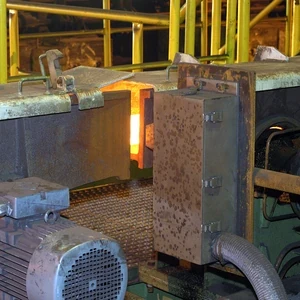

The requirements of woodworking
Wood lines process panels and profiles of very different sizes and finishes: melamine-faced, laminated, lacquered, veneered or raw. On these surfaces, measuring wheels can slip, mark high-quality finishes or wear out through contact with dust and resins. The length count must nevertheless remain accurate, because it determines the cut sizes, the cut-to-length and the correct production of flooring and furniture components. Non-contact measurement therefore offers a clear advantage.
The VLM60, a compact optical encoder, replaces measuring wheels directly and measures down to 0 m/s, making it ideal for the frequent stops of panel sizing lines; the VLM500 is suited to continuous high-speed lines.
Typical applications
Optical solutions are used on panel sizing lines, moulders, edgebanders, coating lines and plants for laminate flooring and parquet. In each of these operations, speed and length measurement feeds cut-to-length, metre counting and unit synchronisation. On a flooring line, for example, accurate length counting ensures planks of consistent nominal size.
Meter counters and panel length
Metre counting and length measurement of panels, profiles and strips.

VLM60 optical encoder
A replacement for measuring wheels, measuring down to 0 m/s.

VLM500 optical speed meters
Speeds up to 50 m/s, uncertainty < 0.025 %, CCD spatial filter.
Advantages for the wood sector
- Non-contact measurement on panels, profiles and delicate finishes
- No marking on melamine-faced or lacquered surfaces
- Accurate, repeatable metre counting and cut-to-length
- Resistance to dust and debris thanks to the absence of contact parts
- Direct replacement for measuring wheels (VLM60)
Metre counting and cut-to-length
Optical length measurement governs metre counting and the cut-to-length of panels and profiles. In practice, every piece is produced at the correct nominal length, reducing scrap and ensuring the right cut sizes for furniture and flooring. Since the measurement is free of slippage, the tolerance remains constant, even on smooth or glossy surfaces where measuring wheels struggle. For this reason many manufacturers adopt optical speed meters on sizing and moulding lines.
The absence of contact also avoids marking high-quality finishes, a crucial point on melamine-faced and lacquered panels intended for furniture. The perceived quality of the finished product improves as a result.
Dusty environments and reliability
Woodworking generates dust and debris that put contact sensors under severe strain. With no moving parts and an IP 65 protection rating, the optical speed meter maintains its accuracy over time with minimal maintenance. Where required, protective accessories and air purges also keep the optical window clean. Ultimately, the optical solution increases line availability and reduces the total cost of operation, with a rapid return on investment on high-volume production.
Recommended products
VLM500 optical speed meters
Speeds up to 50 m/s, uncertainty < 0.025 %, CCD spatial filter.
VLM60 optical encoder
A replacement for measuring wheels, measuring down to 0 m/s.
Optical encoder speed meters
Overview of the optical speed meter and encoder family.
From raw material to finished product
In woodworking, optical measurement accompanies the material throughout the process: from the sizing of raw panels, to moulding, and through to coating lines and flooring production. At each stage, knowing speed and length makes it possible to cut to length, count pieces and synchronise the units. The production flow consequently becomes more regular and predictable, with fewer stoppages and less scrap.
Material yield and sustainability
Wood is a valuable raw material and its yield directly affects costs and sustainability. Accurate length measurement makes it possible to optimise the cut sizes, reducing offcuts and unusable remnants. In practice, every panel is used to its best advantage. For this reason optical measurement does not only improve quality: it also contributes to a more efficient use of the raw material.
Dust, resins and maintenance
Woodworking environments are full of dust and resinous residues that clog and wear out contact sensors. The optical encoder, having no moving parts, drastically reduces maintenance; where required, an air purge keeps the optical window clean. Ultimately, the instrument works for a long time with consistent performance, increasing line availability and reducing interventions.
Support and configuration
The choice between the VLM60 and the VLM500, the working distance and any protective accessories are defined together with RODER technical support according to the type of panel, the finish and the geometry of the line. This gives the optimum configuration for each operation, from the sizing of raw panels to flooring finishing, ensuring consistent accuracy and repeatability over time and keeping maintenance work to a minimum.
Frequently asked questions
Yes. The measurement is contact-free and the automatic optical adjustment handles melamine-faced, lacquered, laminated or raw surfaces without marking them.
Yes. With an IP 65 protection rating and, where needed, air purges on the optical window, they maintain accuracy and reliability even in the presence of dust and debris.
Yes. Length measurement by integration feeds metre counting and cut-to-length, guaranteeing pieces of consistent nominal length.
The VLM60 is ideal for lines with frequent stops, as it measures even at 0 m/s; the VLM500 is for continuous high-speed lines.
No. As it is contact-free, no parts touch the surface, so the finishes remain intact.
Contacts & Information
Contact for general information : info@roder.it
Machine Vision Division of RODER : www.rodervision.com
RODER Instruments Division : www.innovacheck.com
More about RODER : about us
The information contained in this website is provided for information purposes only. Although it has been prepared with the greatest care, it does not constitute a contractual offer or a binding commitment to supply. It may contain transcription, translation or typographical errors. For precise and up-to-date information, please contact our company directly.
Note: Some images on this website have been intentionally generated using artificial intelligence (AI). This is because, for many applications and projects, photographs of the actual installation or system cannot be disclosed owing to confidentiality agreements, contractual clauses and non-disclosure agreements (NDAs).
You must be logged in to post a comment.