






RODER · Inspection · Environmental and process quantities
Moisture in materials
Measuring moisture in materials is a critical check in a great many sectors: construction (concrete, screeds, plaster), wood (structural timber, parquet, joinery), agriculture (grain, hay, biomass), and the paper, textile, leather, food and bioenergy industries (pellets, wood chips, straw). A non-compliant moisture content causes product defects, loss of commercial value, microbiological deterioration, poor energy yields, structural failure and disputes on delivery. The technologies available comprise resistive pin-type moisture meters, pinless capacitive scanners, thermogravimetric balances and microwave probes.
On this page
What the measurement is for: moisture in materials ↑ up
In construction, the moisture of the screed must be measured before laying parquet, porcelain stoneware and resins, in accordance with the specifications of installers and manufacturers (typically < 2 % for cement, < 0.5 % for anhydrite using the CM method); the moisture of industrial concrete is critical for durability and for laying coverings. In wood, the equilibrium moisture content determines dimensional stability and mechanical performance. In agriculture and bioenergy, the water content affects the price, the storability and the net calorific value of the product. In marine surveys, moisture in the hull is an indicator of delamination and rot. In flat roof inspections, pinless scanners make it possible to map damp areas beneath the membrane without invasive drilling.
Measurement techniques ↑ up
Destructive gravimetric methods (oven drying in accordance with DIN EN 13183-1 for wood, ISO 712 for grain) remain the primary reference for accuracy, but they take a long time (hours) and are unsuitable for field inspections. Indirect electrical methods fall into resistive ones (two pin electrodes measure the electrical resistance of the material, inversely proportional to the water content according to calibration curves for each species) and capacitive ones (a plate sensor detects the change in the dielectric constant of the material; in the pinless version it is non-invasive). Microwave methods measure the attenuation of a high-frequency signal and are used for on-line measurements. For concrete in situ, either F2170 RH probes (in a drilled hole, at equilibrium) or capacitive instruments with dedicated curves are used.
Categories covered ↑ up
This section includes pin-type and pinless moisture meters for structural timber, parquet and joinery, specific moisture meters for concrete, screed and building materials with F2170 RH probes and thermogravimetric balances, non-destructive pinless scanners for roofs, walls and insulation, moisture meters for paper, board and cellulose, moisture meters for textiles, leather and fibres, moisture meters for grain and agricultural products with calibration curves by variety, instruments for biomass (pellets, wood chips, logs, hay, straw), moisture meters for food and water activity meters, and specialised moisture meters for boats (GRP and wooden hulls).
Standards ↑ up
The main standards are: for wood UNI EN 13183-1/2/3 and ISO 13061; for grain ISO 712 (drying at 130 °C), ISO 6540 (maize) and ASAE S352 (cereals); for concrete ASTM F2170 (RH probes in drilled holes), UNI 10329 (CM carbide method) and ASTM E1907; for paper ISO 287 and TAPPI T412; for pellets EN 14774 and EN 17225. Thermogravimetric balances follow ISO 11465. Calibration of moisture meters is carried out with reference samples of known moisture content, obtained by stabilisation in a controlled atmosphere and by gravimetric checking.
Selection criteria ↑ up
The choice of instrument depends on the material (with dedicated calibration curves), on the measuring range (3-30 % for wood, 0-10 % for grain, 0-100 % for building scanners), on the need for a non-destructive method, on the accuracy required, on the ambient conditions and on the availability of interfaces for datalogging and traceability. The child pages develop each category.
The pages in this section ↑ up
The in-depth pages for this quantity: techniques, selection criteria and instrument families.
In depth
Moisture in wood and timber
→
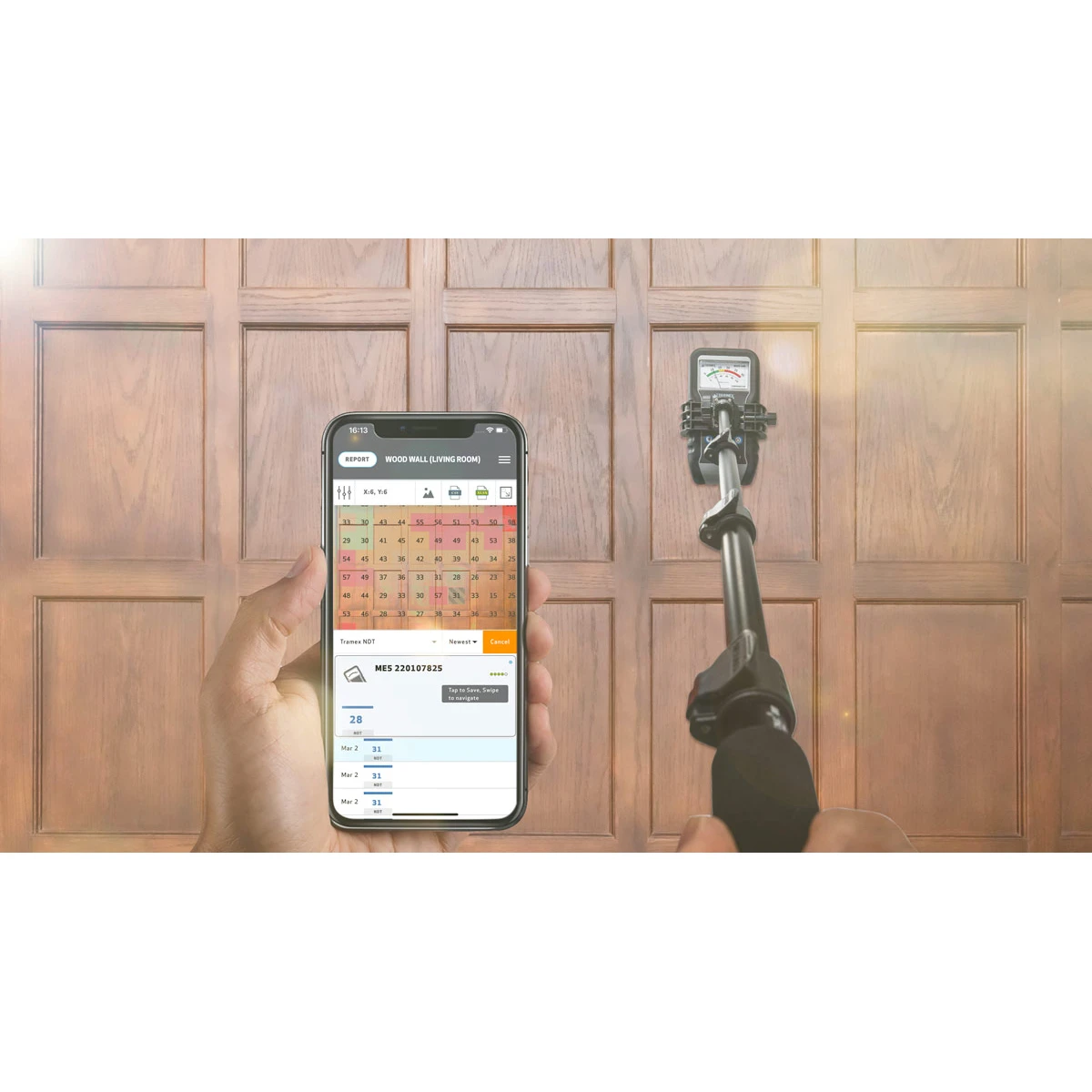
Pin and pinless moisture meters for measuring moisture in structural timber, parquet and joinery.
Moisture meters specific to concrete, screed and building materials, F2170 RH probes and thermogravimetric balances.
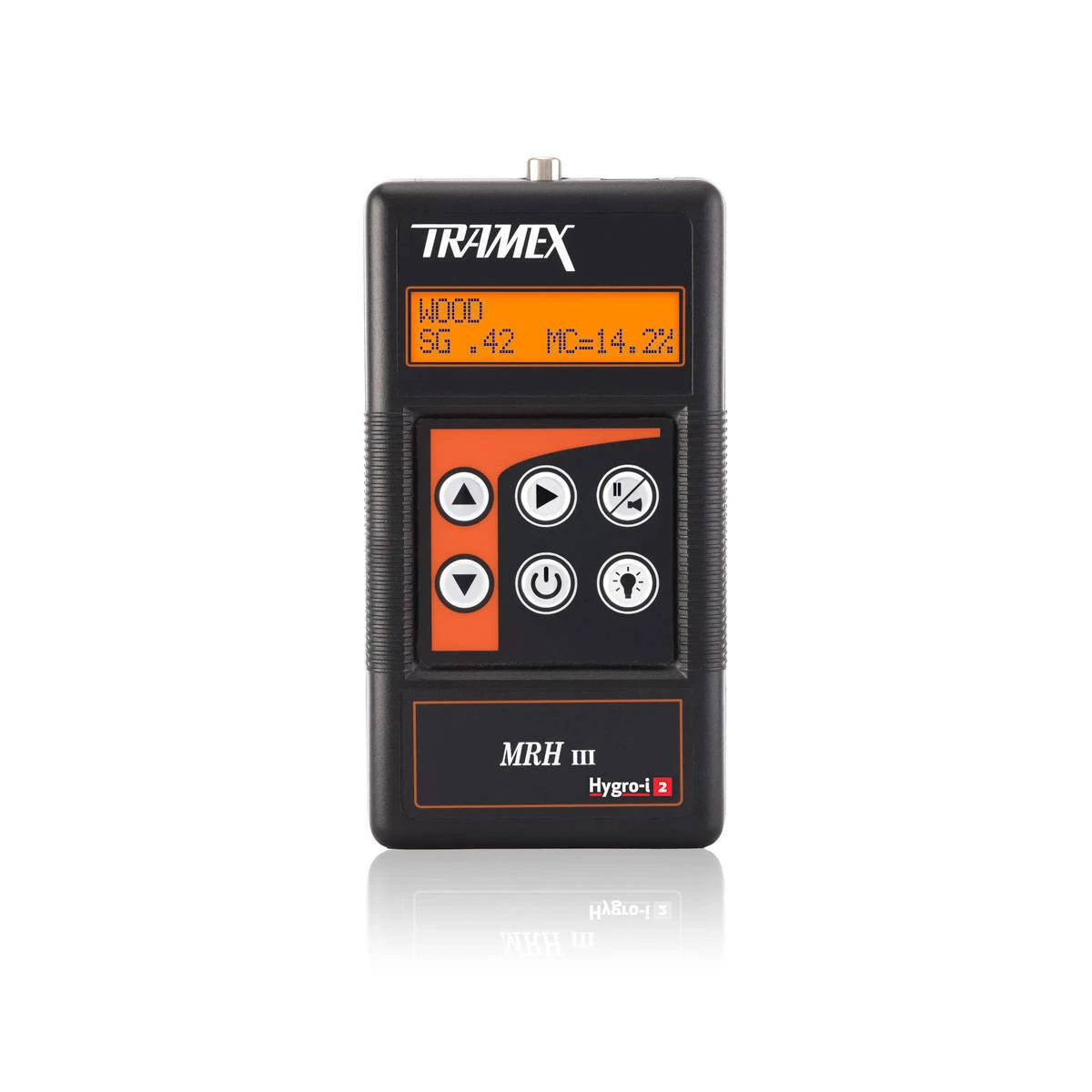
Non-destructive scanners for locating moisture in flat roofs, walls and insulation.
In depth
Moisture in paper, board and pulp
→
Portable and laboratory moisture meters for the paper industry, recovered paper and pulp.
→
Moisture meters for the textile and leather industries, with dedicated probes.
Moisture meters for cereals, maize, soya and oilseeds: portable and laboratory units with calibration curves by variety.
Instruments dedicated to the bioenergy sector: pellets, wood chips, logs, hay and straw.
In depth
Moisture in food and water activity
→
Moisture meters for food, thermogravimetric balances and water activity meters.
→
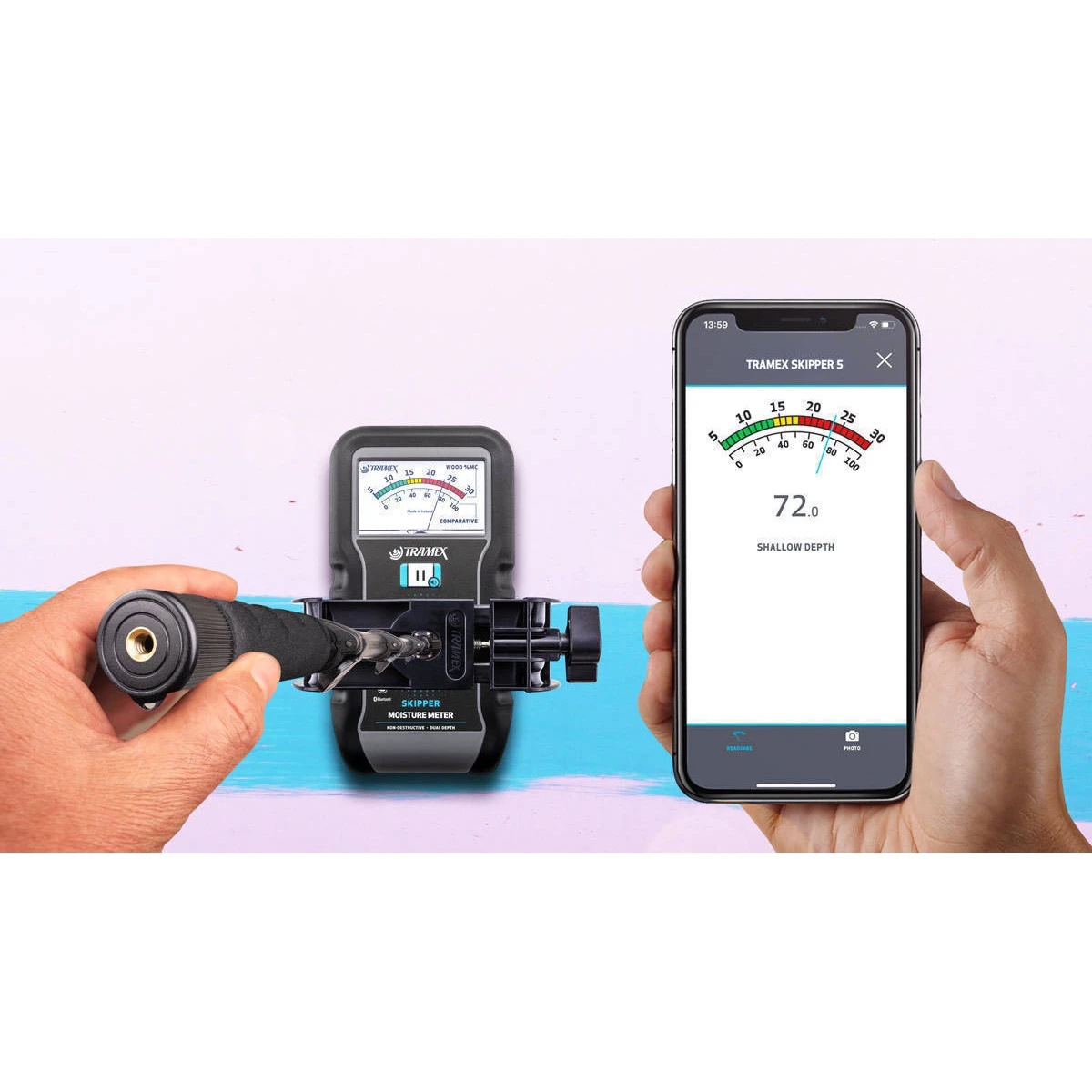
Meters dedicated to GRP and wooden hulls for marine surveys and boatyard work.
The information on this page is provided for information purposes. Although it has been compiled with the greatest care, it may contain transcription errors or typos: for precise, up-to-date information please contact RODER SRL directly.
Recommended Tramex instruments ↑ up
The Tramex impedance moisture meters distributed by RODER for this quantity: technical data sheets on roder.it, availability and quotations on innovacheck.com.
Tramex · catalogue product
Tramex CME5 — moisture meter for concrete and screeds
→

Non-destructive analog Tramex moisture meter for concrete floors and screeds: instant, quantitative moisture content measurement referenced to the gravimetric method, carbide-method equivalent values and comparative readings per ASTM F2659.
Tramex · catalogue product
Tramex CMEX5 — digital concrete moisture meter with RH probes
→
Non-destructive multifunction digital Tramex moisture meter for concrete floors and screeds, with carbide-method equivalent values and ASTM F2659 comparative readings. With the optional probes it also measures in-situ relative humidity per ASTM F2170 and wood moisture.
Tramex · catalogue product
Tramex ME5 — moisture meter for wood and building materials
→

Non-destructive dual-depth analog Tramex moisture meter for instant moisture measurement in building materials: penetration up to 30 mm deep and up to 10 mm at the surface, five sensitivity ranges for wood, drywall and roofing, plaster and tiles, masonry.
Tramex · catalogue product
Tramex MEX5 — digital moisture meter for wood, masonry and screeds
→

Non-destructive dual-depth digital Tramex moisture meter for wood and building materials, with built-in hygrometer, infrared surface thermometer and inputs for in-situ relative humidity probes and pin probes. Over 500 selectable wood species and the Tramex Meters app.
Tramex · catalogue product
Tramex Skipper 5 (SMM5) — moisture meter for hulls and boats
→

Non-destructive dual-depth Tramex Skipper 5 marine moisture meter for detecting hidden moisture in fibreglass hulls, decks and superstructures, including sandwich construction. Measures to 10 mm and to 30 mm, analog display and Bluetooth transfer of readings to the Tramex app.
Tramex · catalogue product
Tramex RWS — roof and wall scanner
→
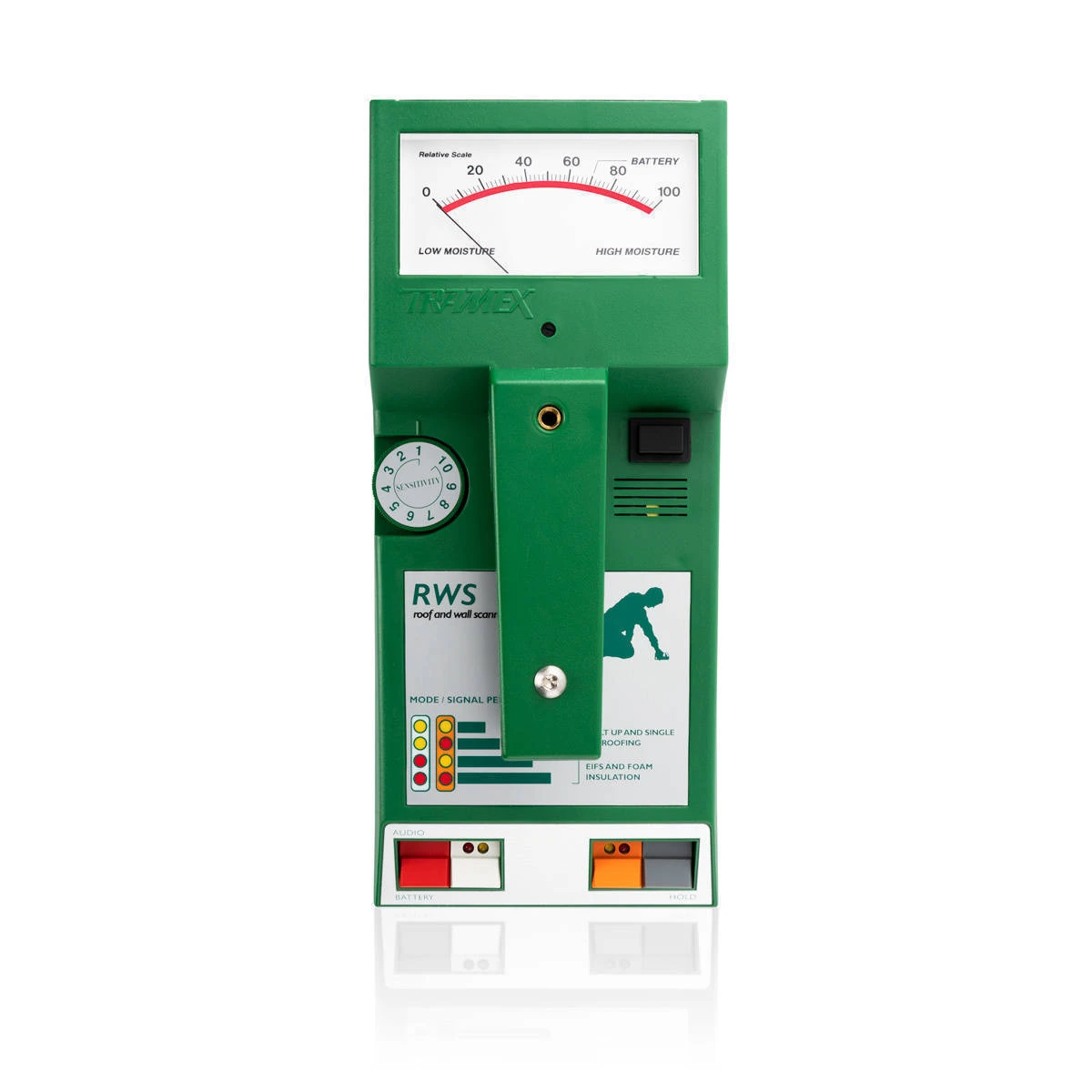
Multimode portable Tramex impedance scanner for assessing moisture in roofing (per ASTM D7954), EIFS systems and foam insulation. Two modes with two sensitivities each, 100 mm penetration, analog display.
Tramex · catalogue product
Tramex Dec Scanner — moisture scanner for flat roofs
→
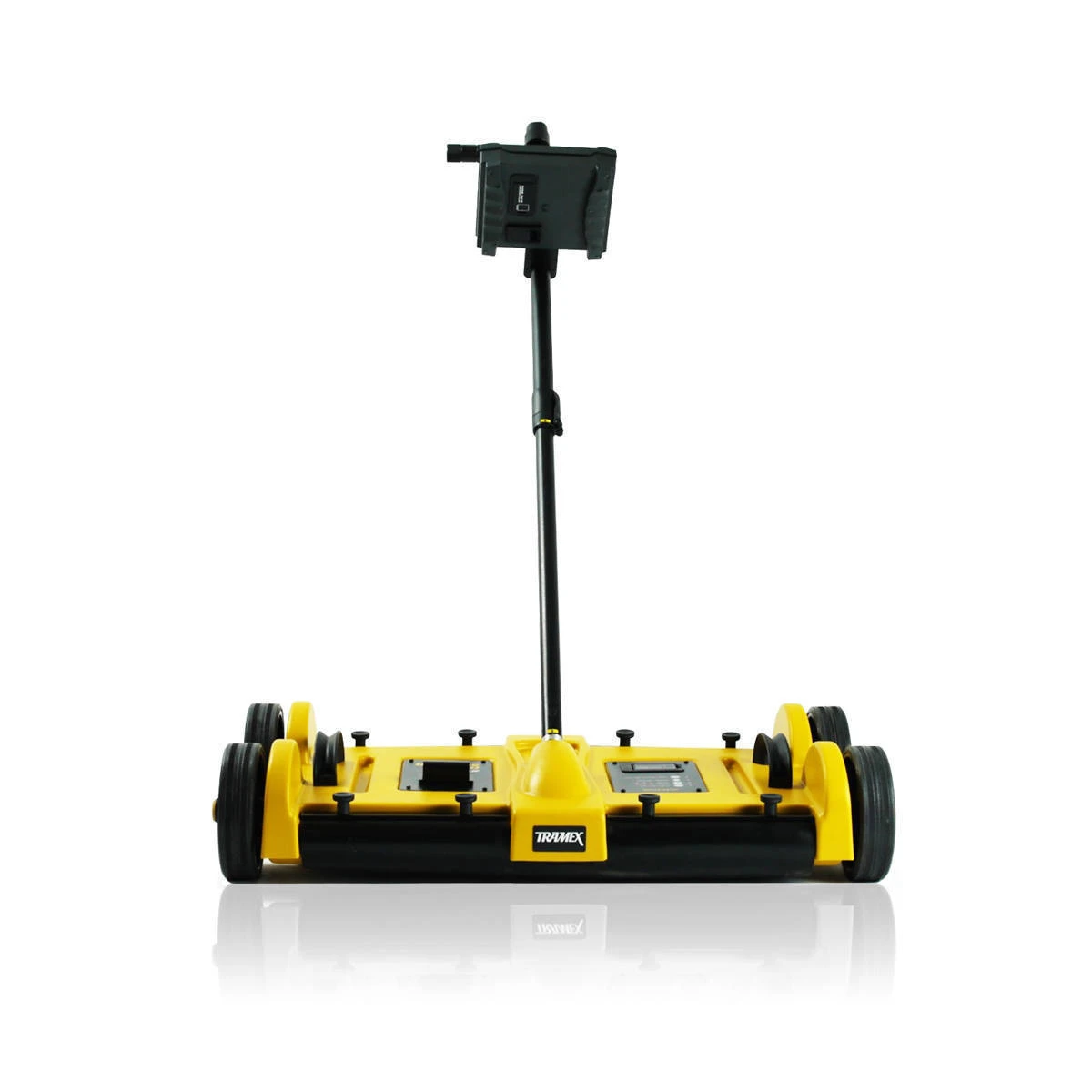
Mobile Tramex impedance scanner for instant moisture surveys of flat roofs and waterproofing systems per ASTM D7954. Three sensitivity ranges, penetration up to 152 mm, detects and traces leaks through the roof build-up.
Contacts & Information
Contact for general information : info@roder.it
Machine Vision Division of RODER : www.visiotronix.com
RODER Instruments Division : www.innovacheck.com
More about RODER : about us
The information contained in this website is provided for information purposes only. Although it has been prepared with the greatest care, it does not constitute a contractual offer or a binding commitment to supply. It may contain transcription, translation or typographical errors. For precise and up-to-date information, please contact our company directly.
Note: Some images on this website have been intentionally generated using artificial intelligence (AI). This is because, for many applications and projects, photographs of the actual installation or system cannot be disclosed owing to confidentiality agreements, contractual clauses and non-disclosure agreements (NDAs).
You must be logged in to post a comment.