
RODER | SIMEX Systems
SIMEX WASTE PACK — baling, traceability and logistics of recovered paper bales
The SIMEX WASTE PACK module governs the stage in which sorted recovered paper is pressed into bales, identified with an RFID tag and sent on to the warehouse and to logistics. It covers baler management, line productivity, weighing and moisture control, the virtual warehouse of bales and the transport documents (DDT).
Every bale becomes an individually tracked unit: from the moment of baling through to shipment, weight, moisture, composition and location are recorded and available in real time, ensuring full traceability and compliant document management.
What SIMEX WASTE PACK is for?
It identifies every bale with RFID: weight, moisture and location tracked from the baler to shipment.
On this page
- The WASTE PACK module within the SIMEX cycle
- Incoming flows to the balers and scheduling
- Baling and bale production
- RFID labelling and bale identification
- Weighing, density and moisture of the recovered paper
- Baler management and productivity
- Interfacing with balers and sorting systems
- Handhelds and RFID technologies in the field
- Virtual warehouse and bale location
- Logistics, handling and transport documents
- Real-time reporting and operating margin
- Integration with MES, ERP and SCADA
- Applications by sector

Would you like help choosing the right product ?
The WASTE PACK module within the SIMEX cycle

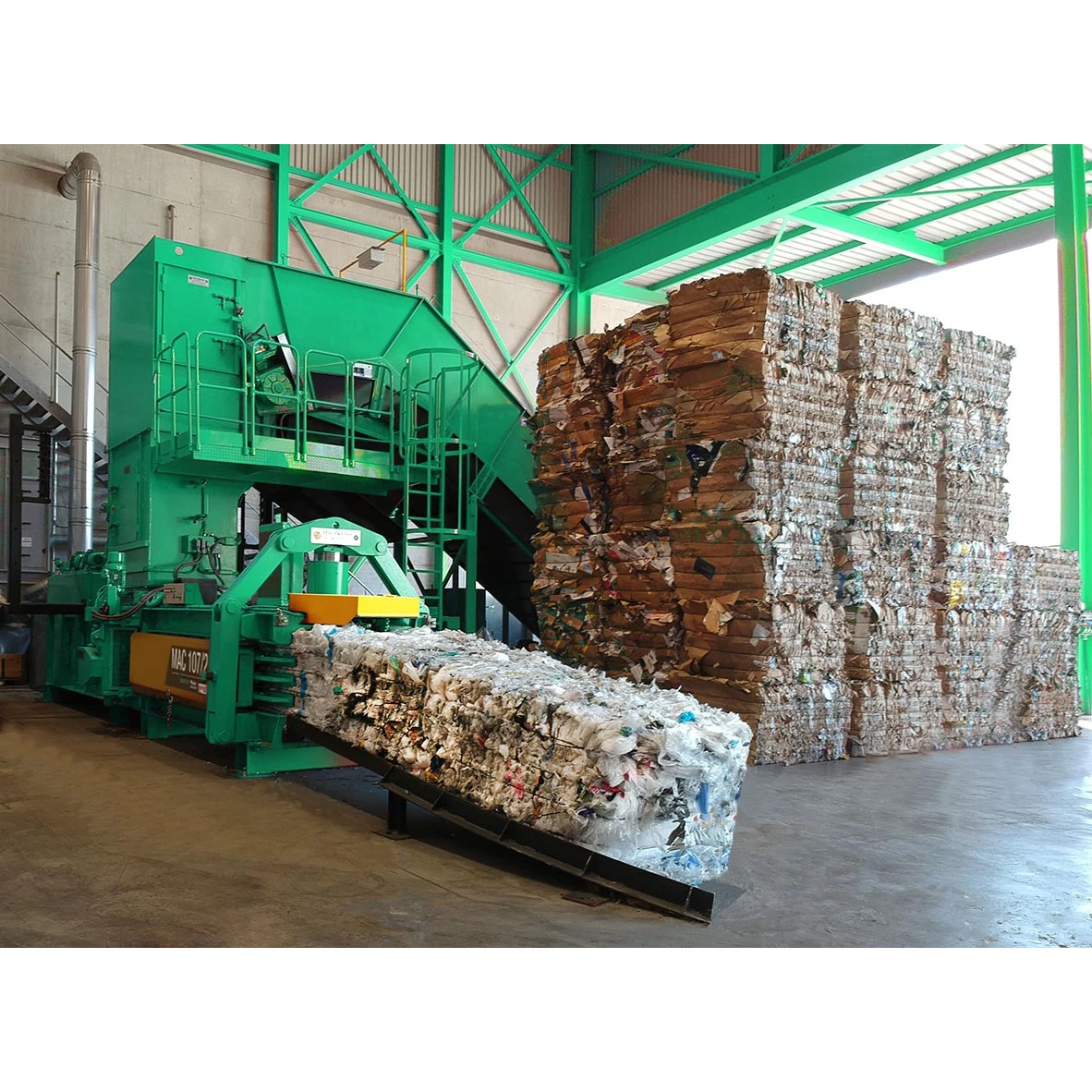
In the SIMEX cycle the WASTE PACK module takes the material leaving the sorting cabin (WASTE FLOW module) and governs its transformation into pressed bales ready for shipment or for feeding the pulper at the mill. It is the stage in which recovered paper passes from loose form to an identified, weighed and stored product.
Introducing RFID technology at this stage makes it possible to associate each bale with a unique identity that accompanies it throughout its life cycle: material characteristics, weight, moisture, production date, warehouse location and transport documents.
The result is a virtual warehouse always aligned with physical reality and fully tracked logistics, in which every movement leaves a record usable for control purposes and for documentation toward the customer.
Incoming flows to the balers and scheduling
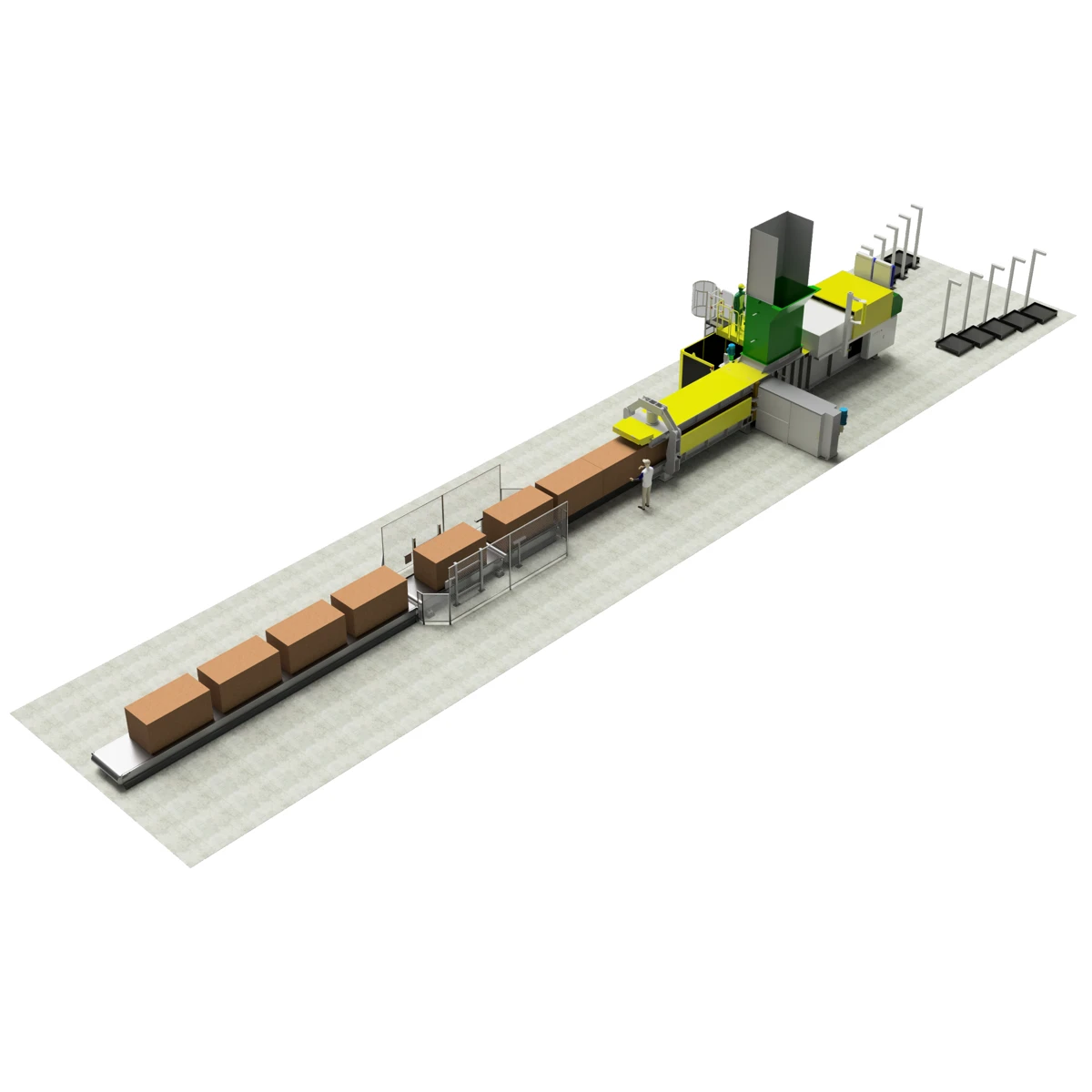
Before baling, every batch of recovered paper destined for the line is recorded and made traceable. Identification takes place through RFID readers or barcodes, so that the material loaded into the baler stays linked to the delivery it came from.
The scheduling of batches follows a FIFO criterion, to avoid prolonged storage and to make regular use of the plant and of the warehouse space. The processing sequence is therefore determined by data and not by the chance availability of material in the yard.
Incoming quality control relies on checklists and on photographic documentation captured with a smartphone or handheld: the check is recorded at the moment it is carried out and stays associated with the batch, available for subsequent verification.
Baling and bale production
The baler compacts the sorted recovered paper into bales of controlled size and density. SIMEX manages line productivity, recording the number of bales produced, the cycle times and the yields per shift, and integrating the data with the rest of the process.
The RFID tag is applied automatically on the line, so that every bale is identified at the very moment it is formed, with no subsequent manual step.
The link with the upstream modules makes it possible to reconstruct, for each bale, the origin of the material, the supplier and the processing it underwent in the sorting cabin, closing the traceability chain from the receipt of loose recovered paper through to the finished product.
RFID labelling and bale identification
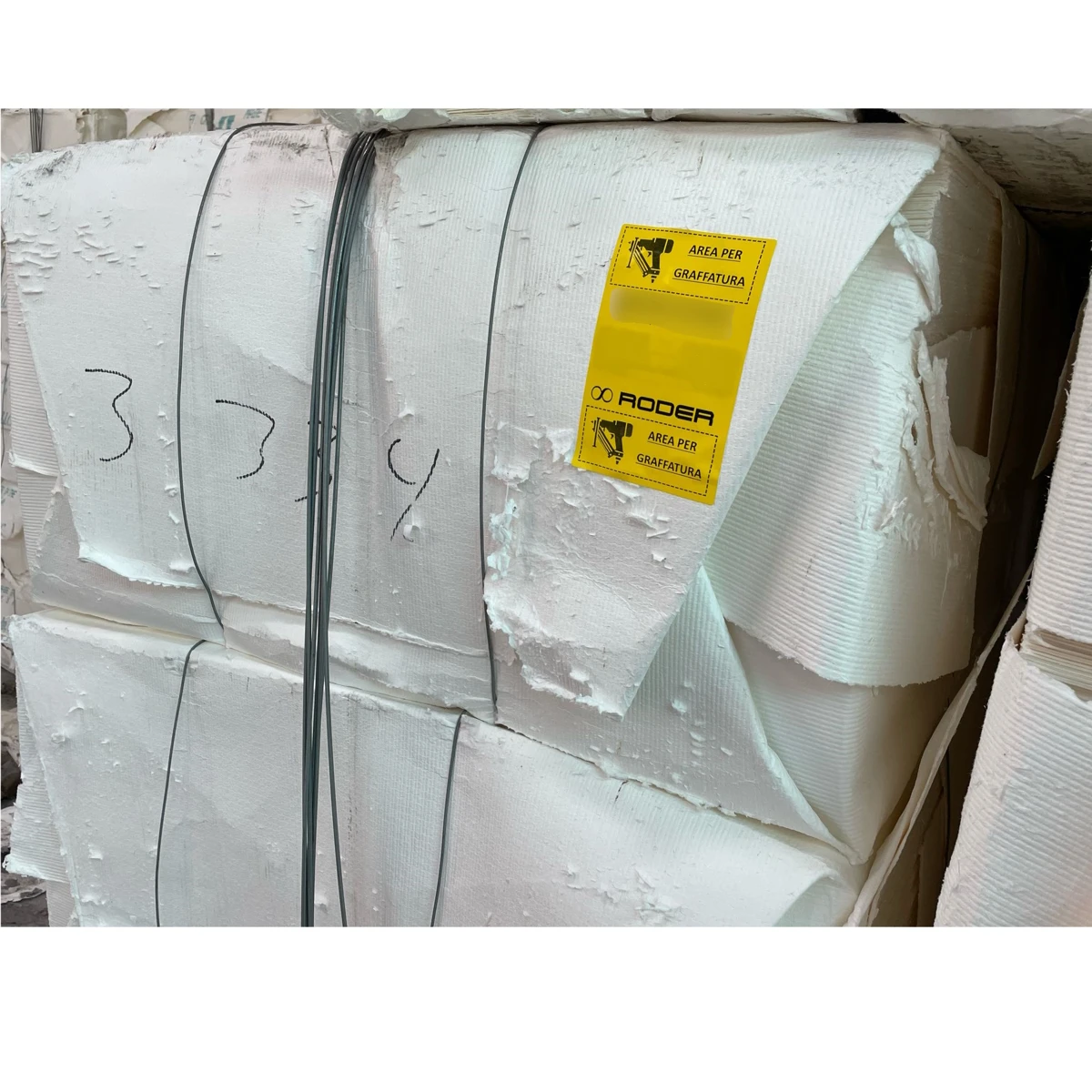
Every bale is fitted with an RFID tag that constitutes its digital identity. The tag allows automatic reading at a distance without the need for direct line of sight, which a traditional barcode instead requires.
The tag stores the characteristics of the material — type, weight, moisture, production date, origin — making every bale identifiable and verifiable at any point in the supply chain.
- Type and quality of the baled material
- Weight of the bale and moisture measured
- Production date and reference to the sorting batch
- Origin of the material and supplier it came from
- Logistics status and current warehouse location
Weighing, density and moisture of the recovered paper

The weight of each bale is measured through integrated scales with digital indicators, which acquire gross and net weight and associate them automatically with the RFID tag. The weighing data are synchronized with the production batch, with no intermediate transcription.
From the ratio between weight and volume the system derives the density of the bale. It is a concrete operational parameter: it affects storability in the warehouse and transport costs, because it determines how much material actually fits into one trip.
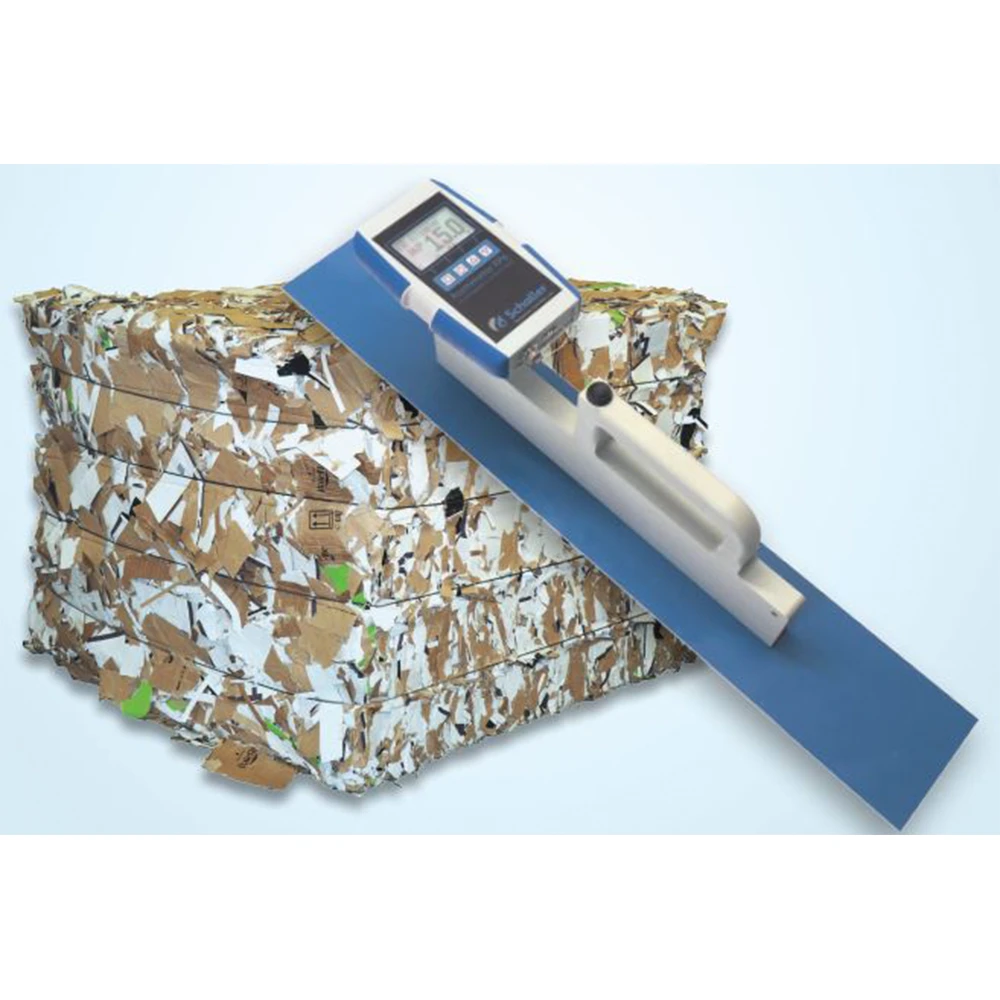
Control of the moisture of the recovered paper completes the picture: moisture affects the commercial weight and the yield at the mill. SIMEX records the measurements taken with portable instruments on the bales and links them to the bale itself, making it possible to document the quality of the material and to identify out-of-specification batches.
Baler management and productivity
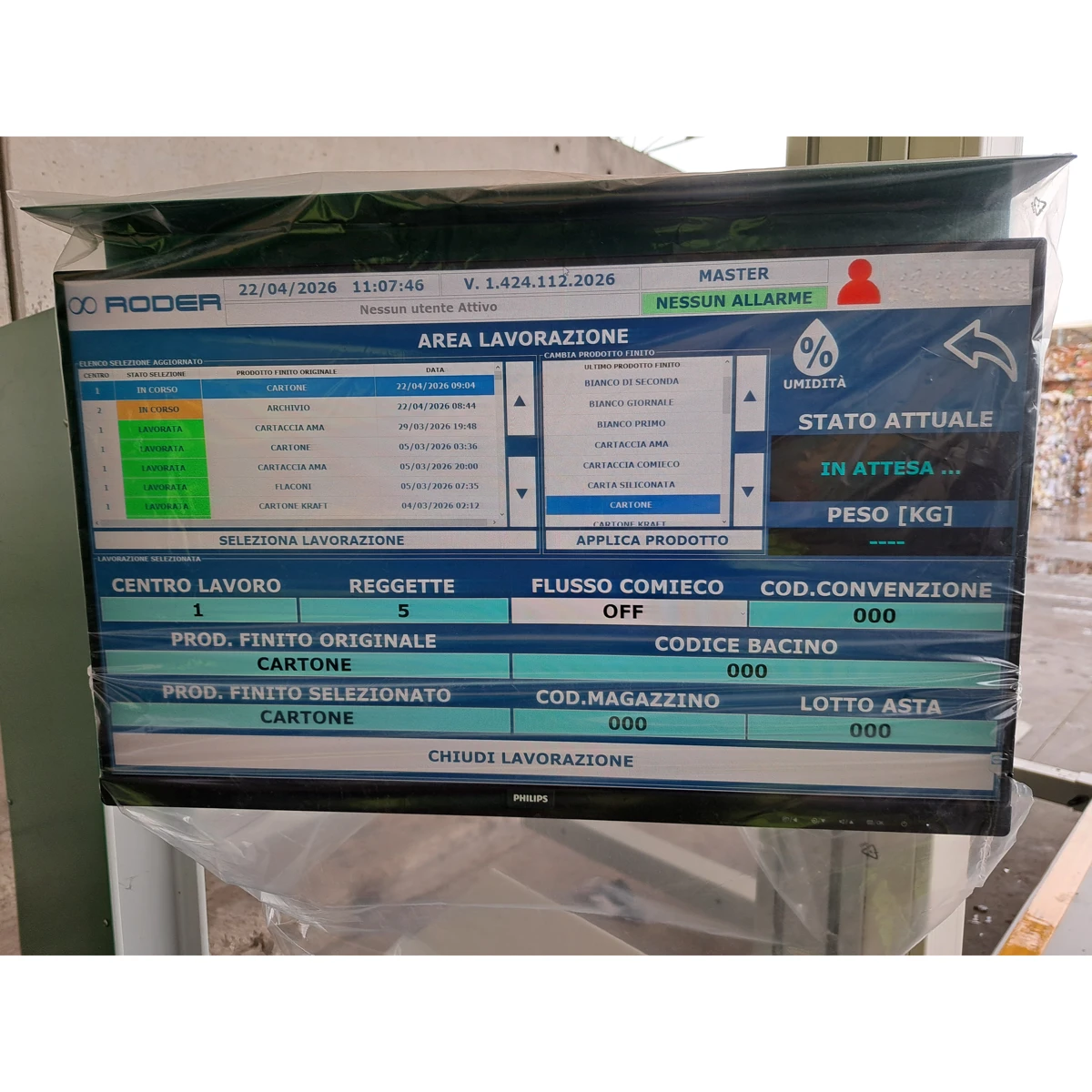
A dedicated control panel makes it possible to follow the status of the baler and of production in real time. Operators and department managers have up-to-date indicators on productivity, downtime and yields.
The parameters measured are the cycle time in its loading, baling and unloading stages, the weight per cycle and the number of bales produced. From these values the productivity coefficients of the line are derived.
Having consistent data makes it possible to compare performance across shifts, lines or different sites and to understand whether a drop in yield is due to the material, to the baler settings or to the organization of the shift, instead of proceeding by guesswork.
Interfacing with balers and sorting systems
SIMEX communicates with the plant machinery through standard automation protocols, in particular OPC UA and Modbus TCP/IP. The integration is bidirectional: the system reads the status of the machines and can send settings to them.
The functions include real-time monitoring of balers and sorting sensors, the automatic setting of machine cycles and recipes and the receipt of alarms, such as jams or scheduled maintenance.
The operational benefit is a reduction in downtime: an anomaly is reported the moment it occurs and reaches whoever has to act on it, instead of emerging at the end of the shift from a comparison of production data.
Handhelds and RFID technologies in the field

Data collection in the department and in the yard is carried out with instruments designed for industrial use, with no fixed workstations and no paper forms.
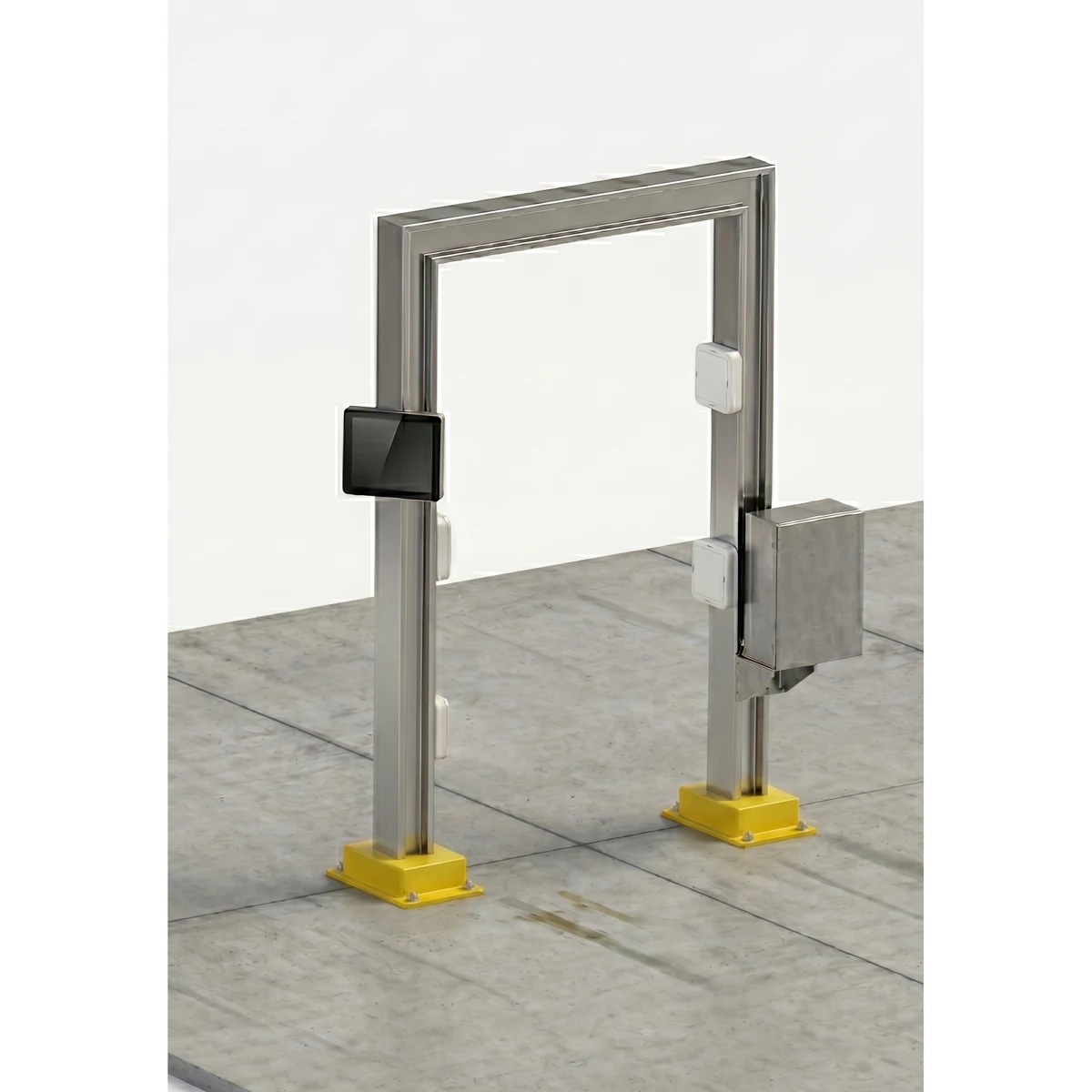
Operators use handhelds to record movements and checks. The RFID tags applied to bales and pallets allow automatic identification, while the radio-frequency reading portals placed at transit points detect passage without operator intervention.
The data thus originate where the physical event takes place and are immediately available in the system: deferred recording times are eliminated and, above all, so are transcription errors.
The tag applied to the bale also accompanies it from stage to stage: the same identification read at the baler is found again in the warehouse and at shipment, so that the link between processing, storage and transport document does not have to be reconstructed afterwards.
Virtual warehouse and bale location
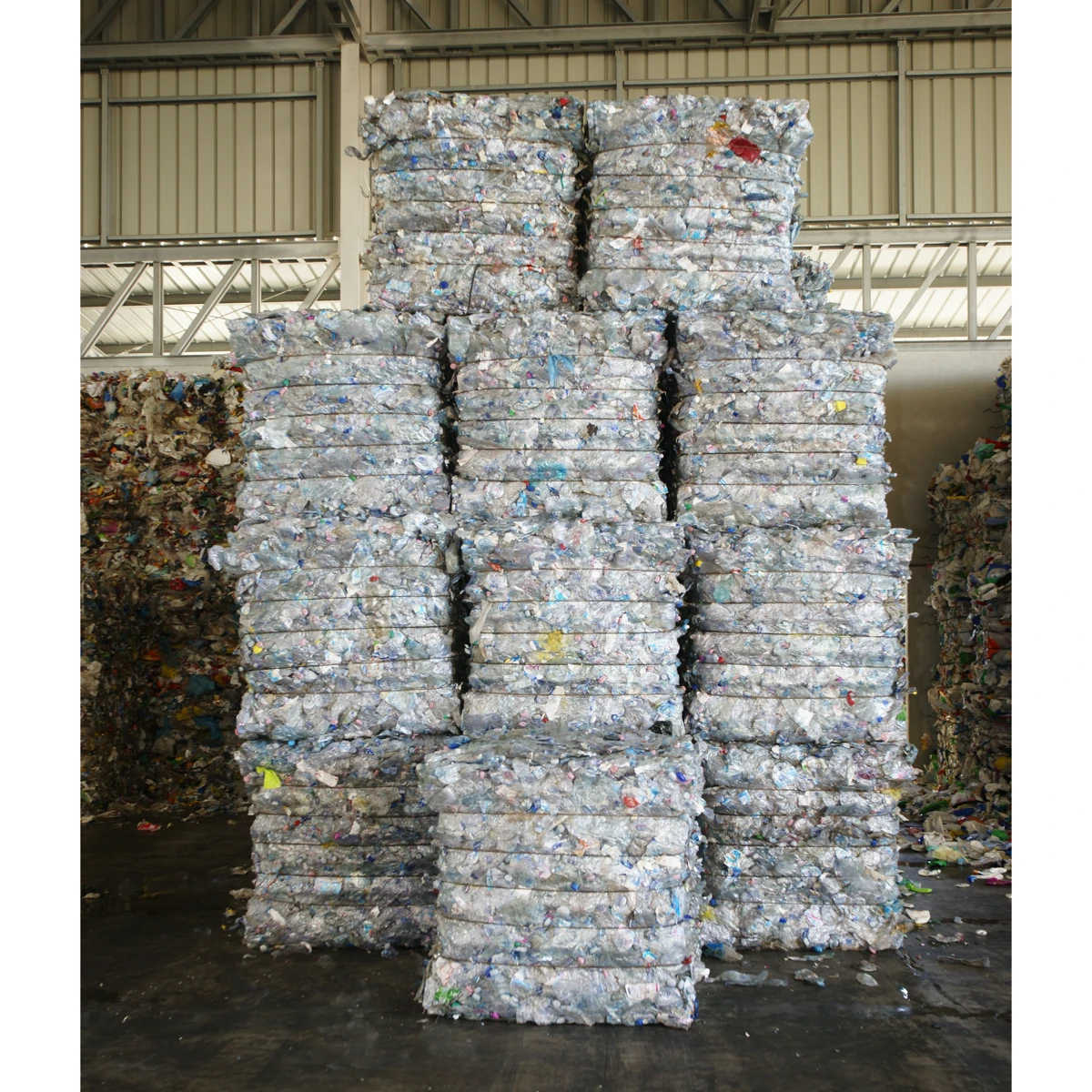
The bales produced converge into a virtual warehouse that mirrors the physical storage situation in real time. Every bale is referenced to its own location and the system keeps stock levels updated by material type, total weight and production date.
RFID management allows fast and reliable stocktaking, the immediate identification of the bales to be shipped according to FIFO criteria and a reduction in picking errors.
The virtual warehouse eliminates the misalignment typical of manual management, in which the position declared in the system does not match the real one, and provides a reliable data basis for planning shipments.
Logistics, handling and transport documents
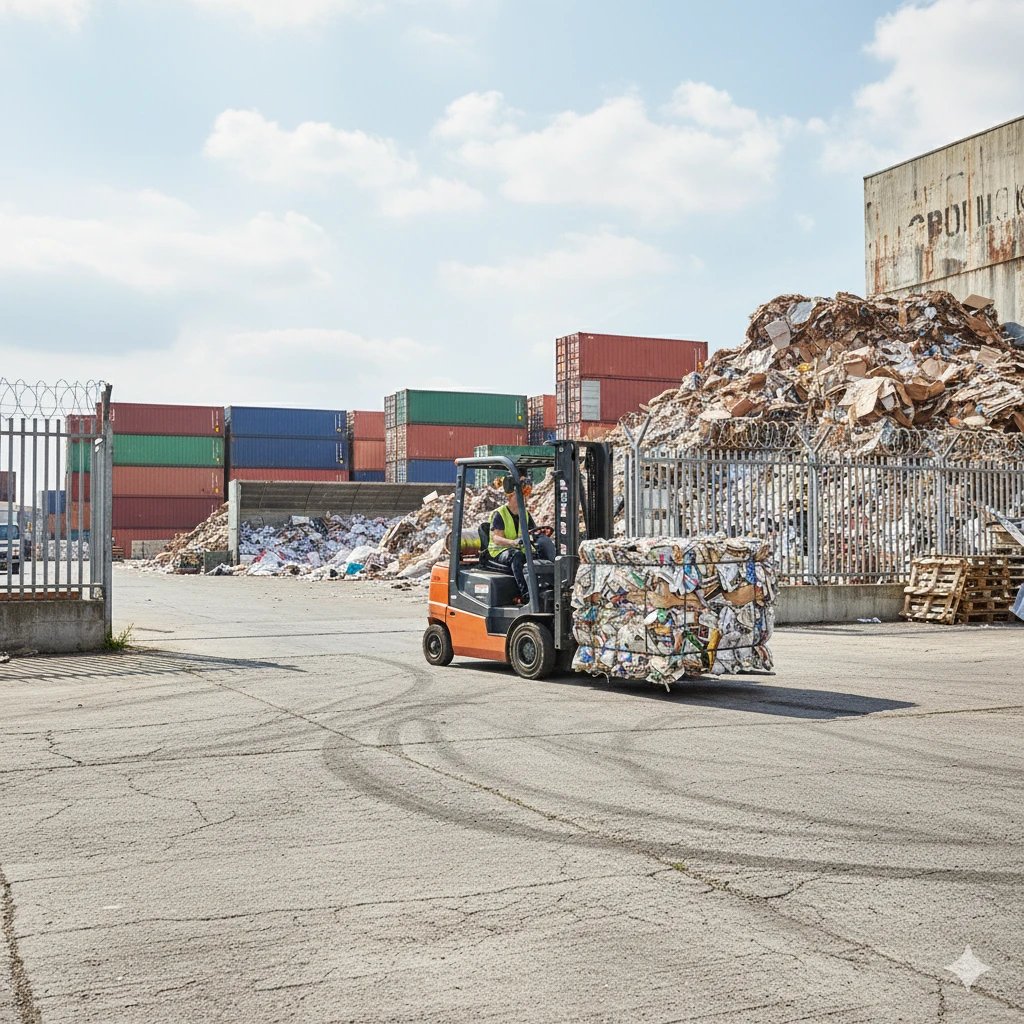
The handling of bales is managed with RFID readers installed on the internal transport vehicles and on reading portals placed at transit points. The passage of a bale through a portal automatically updates its logistics status.
At the shipping stage the system generates the transport documents (DDT) from the bales actually loaded, with weights and characteristics already recorded in the tags.
This ensures consistency between the physical load and the documentation, reduces keying errors and guarantees full traceability of outgoing material, even in the event of a dispute raised by the recipient.
Real-time reporting and operating margin

The data collected feed dashboards that can be consulted on tablet and desktop, customizable with charts and tables according to the role of the person using them.
The system manages minimum operating margin thresholds for each line or department and sends alerts by e-mail or SMS when the value falls below the threshold set: the warning arrives while production is under way, not after the fact.
Reports can be exported as PDFs with the company layout and sent on a schedule to managers and administrative offices, making reporting an automatic and repeatable process rather than a manual collection of data.
Integration with MES, ERP and SCADA

SIMEX integrates with the company information infrastructure through native connectors and REST APIs.
The link to the MES synchronizes production orders and line status; the link to the ERP feeds invoicing, warehousing and accounting; integration with SCADA systems makes the data available for advanced analysis and management reporting.
The modular architecture makes it possible to start from the priority functions and extend coverage progressively, keeping a single database and without duplicating data entry.
1 million
RFID TAGS managed in the recovered paper supply chain
100%
traceability of every bale from the baler to shipment
+13%
process efficiency with digitalized management
Applications by sector
The WASTE PACK module originated on recovered paper baling lines, but its functional framework — unit identification, weighing, traceability of the stages and connection to management systems — applies to every context in which a loose material is transformed into a load unit to be handled and documented.
Paper and board

This is the reference field. In collection platforms and sorting centers the system governs baling, RFID labelling of the bales, weighing with density calculation and warehouse storage.
Being able to trace a bale back to the delivery it came from is decisive when the downstream customer disputes the quality of the supply: the documentation, including the images captured during inspection, is already linked to the batch and does not have to be reconstructed.
Density and moisture control directly affects the valorization of the material, because it determines both the commercial weight and the quantity that can be transported per trip.
Logistics and warehousing

Wherever material is stored and handled, RFID identification of the units and reading at transit portals keep the virtual warehouse aligned with the physical situation.
The functions used are the location of units, stocktaking without manual handling, picking according to FIFO criteria and the generation of transport documents from what has actually been loaded.
The stock figure becomes the result of the readings recorded, not of a periodic count, and remains available in real time to whoever plans the shipments and to whoever answers the customer about the delivery date.
The same framework makes it possible to manage batches with different characteristics in the same warehouse: the units to be shipped can be selected by type, by production date or by quality parameters, without preliminary physical inspections.
Process manufacturing

In continuous-flow plants the system collects line data through the automation protocols and makes them comparable over time.
Monitoring the line parameters makes it possible to detect deviations from the expected conditions and to report them as they occur, shortening the time between anomaly and intervention. The history provides the basis for scheduling maintenance according to the actual use of the machines rather than at fixed intervals.
The same data feed the calculation of the operating margin by line or department, so that the economic impact of a stoppage or of a drop in yield is immediately readable.
Transport and vehicle handling

Managing the flow of incoming and outgoing vehicles is an integral part of the cycle: weighing, verification of the plate and the supplier, authorization to unload and recording of the operator.
The coordination of loading and unloading operations draws on the same data used for production, so that the status of a vehicle and that of the material it carries remain aligned.
Transport documentation is produced by the system, without manual re-entry of weights and quantities, and vehicle dwell time in turn becomes a measured figure, useful for acting on queues in the yard.
Knowing the duration of each individual operation — weighing, loading, exit — also makes it possible to schedule supplier delivery slots and to size the yard staffing at times of heavier traffic.
Frequently asked questions
It governs the baling of sorted recovered paper, the RFID labelling of the bales, weighing with density calculation and moisture control, the virtual warehouse and logistics with generation of the transport documents.
Type and quality of the material, weight, moisture, production date, origin and sorting batch, as well as logistics status and current warehouse location.
Because the ratio between weight and volume determines storability in the warehouse and transport costs, that is how much material actually fits into one trip.
Moisture affects the commercial weight and the yield at the mill: recording it for every bale makes it possible to document quality and to identify out-of-specification batches before shipment.
The DDTs are produced automatically from the bales actually loaded, with weights and characteristics already present in the RFID tags, ensuring consistency between the physical load and the documentation.
Yes: minimum margin thresholds are set for each line or department and the system sends alerts by e-mail or SMS when they are crossed, with reports exportable as PDFs and sendable on a schedule.
The information on this page is provided for information purposes. Although it has been compiled with the greatest care, it may contain transcription errors or typos: for precise, up-to-date information please contact RODER SRL directly.
Contacts & Information
Contact for general information : info@roder.it
Machine Vision Division of RODER : www.rodervision.com
RODER Instruments Division : www.innovacheck.com
More about RODER : about us
The information contained in this website is provided for information purposes only. Although it has been prepared with the greatest care, it does not constitute a contractual offer or a binding commitment to supply. It may contain transcription, translation or typographical errors. For precise and up-to-date information, please contact our company directly.
Note: Some images on this website have been intentionally generated using artificial intelligence (AI). This is because, for many applications and projects, photographs of the actual installation or system cannot be disclosed owing to confidentiality agreements, contractual clauses and non-disclosure agreements (NDAs).
You must be logged in to post a comment.