





RODER · Inspection · Dimensions and geometry
Material thickness
Measuring the thickness of sheet metal, film, the walls of tubes and vessels, textiles, paper, leather, rubber, plastic and composite materials is a critical dimensional check in many production and industrial maintenance processes. The technologies available range from simple, robust mechanical fork instruments to ultrasonic thickness gauges for checking walls that are not accessible from both sides, through to laser and magnetic systems for non-contact measurement on the production line. Choosing the right technique depends on the material, on the geometry of the part and on the tolerances required.
On this page
What the measurement is for: material thickness ↑ up
Typical applications include checking the thickness of rolled and blanked sheet in the metallurgical sector, verifying the remaining wall of piping, tanks and vessels subject to corrosion (petrochemical, marine and oil & gas industries), measuring extruded plastic film and aluminium strip, quality control of paper and board (paper industry), fabrics, tanned leather, rubber, CFRP/GFRP composite materials for automotive and aerospace, thin foil and metal foils. In continuous process plants, integrated laser and UT systems provide real-time feedback for automatic line adjustment.
Thickness measuring technologies ↑ up
Mechanical fork thickness gauges measure by direct contact, with typical resolutions of 0.01-0.001 mm; the presser-foot type are covered by textile and paper standards (DIN 53105, ISO 4593). Ultrasonic thickness gauges (UT) exploit the flight time of an acoustic pulse travelling through the material and reflected by the opposite surface: the speed of sound in the material (typically 3000-6000 m/s in metals) determines the relationship between time and thickness. Dual-element technology (twin-crystal probes) allows measurement in the presence of corrosion, even on irregular surfaces. Non-contact laser thickness gauges apply triangulation or confocal sensors to measure sheet and strip in motion. Magnetic instruments exploit variations in the field to measure the walls of steel containers.
Instrument categories covered ↑ up
The section brings together mechanical fork and micrometer thickness gauges for sheet and foil, thickness gauges for thin film and strip, bench thickness gauges for textiles, paper, leather and rubber in accordance with DIN/EN/ISO/ASTM standards, ultrasonic thickness gauges for corrosion with dual-element probes, precision single-element UT gauges for thin and composite materials, non-contact laser thickness gauges for in-line measurement (LTM, LWM), and magnetic thickness gauges for measurements on walls accessible from one side only.
Regulations and standards ↑ up
UT measurement follows EN 14127, EN 15317 and ASTM E797 for thickness in the presence of corrosion, as well as UNI EN ISO 16809 for the test procedure. For textile thickness gauges, ISO 5084 and DIN 53105 apply; for paper, UNI EN ISO 534 (single-sheet thickness); for rubber and leather, UNI EN ISO 23529 and ISO 2589. The metrological acceptance criteria are laid down by ISO 14253 for conformity with tolerances, while periodic calibration uses reference blocks of known thickness certified in accordance with ISO 17025.
Selection criteria ↑ up
The choice of instrument depends on the material (metal, plastic, composite, rubber, paper), on the accessibility of the part (one or two sides), on the thickness range (from micrometres to hundreds of millimetres), on the operating conditions (temperature, presence of coatings, corrosion), on the need for portability or in-line integration, and on the uncertainty required. The child pages examine each technological family in more detail, with parameters, advantages and application limits.
Instruments and product families for thickness measurement ↑ up
The techniques described on this page correspond to these instrument families and in-depth pages:
- Fork thickness gauges
- Ultrasonic thickness gauges
- Coating thickness gauges
- LTM series LASER thickness gauges
- Mechanical fork and micrometer thickness gauges
- Thickness gauges for thin sheet, foil and tape
- Thickness gauges for textiles, paper, leather and rubber (DIN/EN/ISO/ASTM)
- Magnetic wall thickness gauges
- Ultrasonic thickness gauges per corrosione
- Ultrasonic thickness gauges di precisione
- Non-contact laser thickness gauges
The pages in this section ↑ up
The in-depth pages for this quantity: techniques, selection criteria and instrument families.
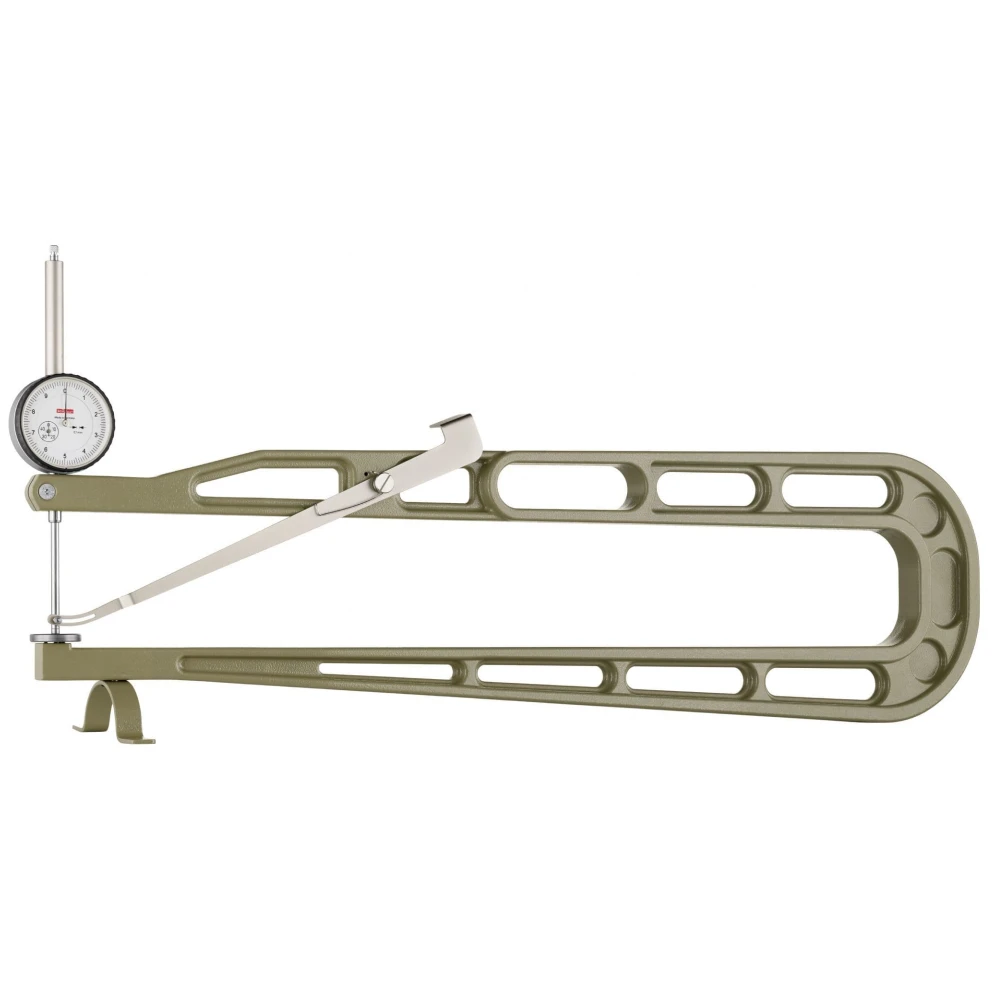
Dial and digital thickness gauges with a deep throat, for measuring the thickness of sheet metal, foil and film.
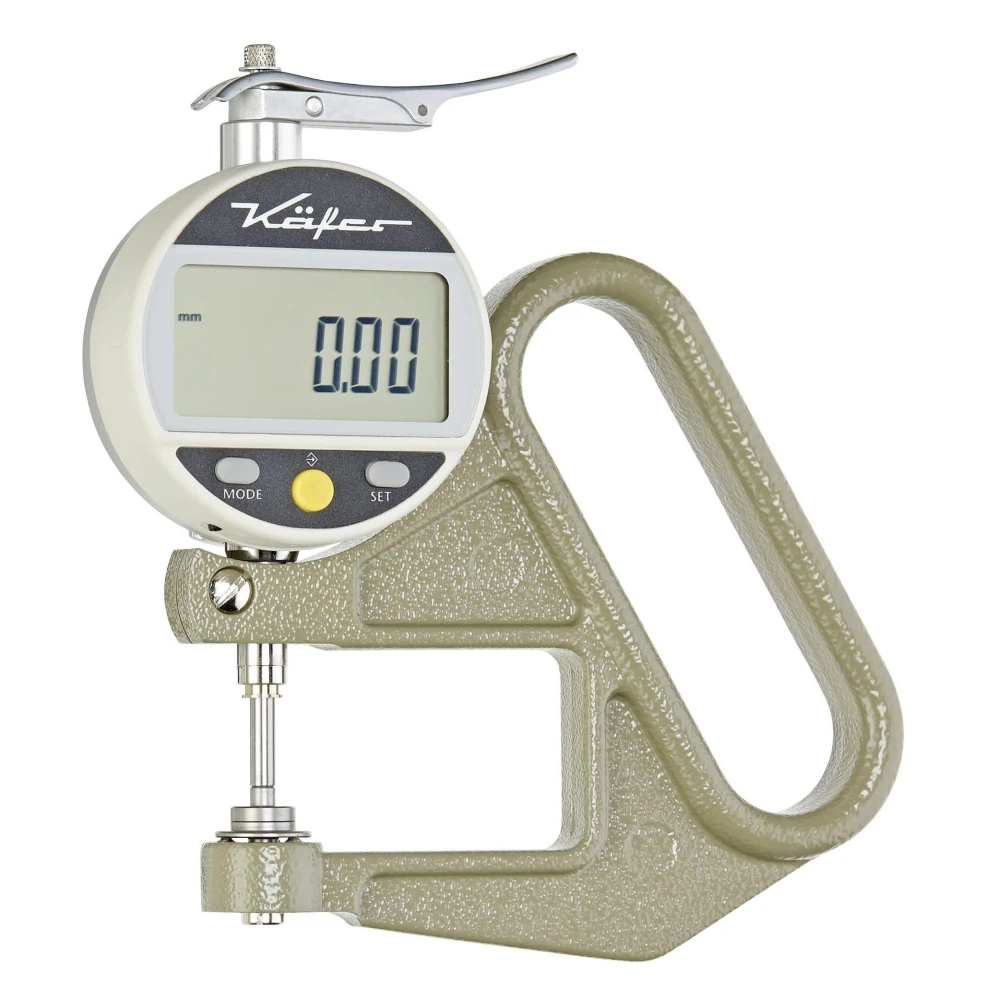
Precision instruments for measuring film and thin plastic and metal sheet, including roller models.

Bench presser-foot thickness gauges to the textile, paper and leather standards.
In depth
Non-contact laser thickness gauges
→

Laser systems for non-contact thickness measurement of plates, strips and sheets, including in-line.
In depth
Magnetic wall thickness gauges
→
Magnetic thickness gauges for measuring walls that cannot be reached from both sides (vessels, tanks).
→

High-resolution single-element UT thickness gauges for measurement on thin materials and composites.
The information on this page is provided for information purposes. Although it has been compiled with the greatest care, it may contain transcription errors or typos: for precise, up-to-date information please contact RODER SRL directly.
Contacts & Information
Contact for general information : info@roder.it
Machine Vision Division of RODER : www.visiotronix.com
RODER Instruments Division : www.innovacheck.com
More about RODER : about us
The information contained in this website is provided for information purposes only. Although it has been prepared with the greatest care, it does not constitute a contractual offer or a binding commitment to supply. It may contain transcription, translation or typographical errors. For precise and up-to-date information, please contact our company directly.
Note: Some images on this website have been intentionally generated using artificial intelligence (AI). This is because, for many applications and projects, photographs of the actual installation or system cannot be disclosed owing to confidentiality agreements, contractual clauses and non-disclosure agreements (NDAs).
You must be logged in to post a comment.