




-

Analysis of high-speed fluid motion phenomena
High-speed motion analysis in fluids uses advanced slow-motion techniques with high-speed cameras, enabling detailed study of complex phenomena. This methodology provides valuable data for optimising industrial processes and understanding fluid dynamics in engineering applications.
-

Analysis of high-speed phenomena with slow-motion techniques
Analysing extremely high-speed phenomena using slow-motion techniques with high-speed cameras makes it possible to study dynamic events with great precision. This approach provides important information on rapid physical processes, contributing to a better understanding of mechanical and fluid-dynamic behaviour. Applications range from scientific research to industry, supporting the development of innovative solutions.
-
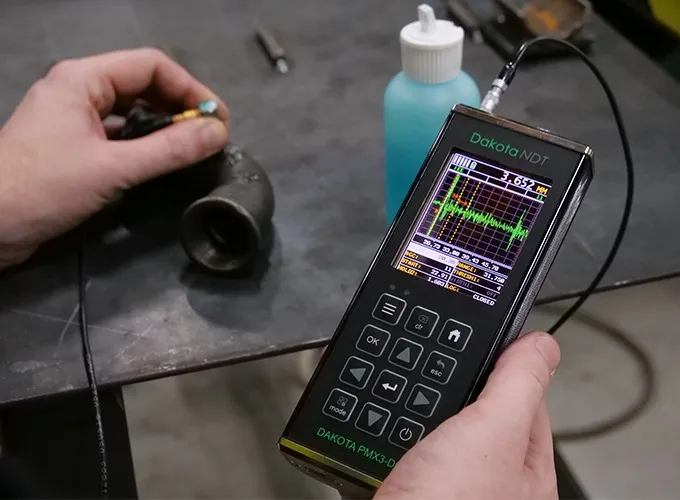
Ultrasonic weld analysis
Ultrasonic testing (UT) of welds detects internal defects — cracks, lack of fusion, inclusions — in accordance with EN ISO 17640, AWS D1.1 and ASME Section V. The Dakota NDT range (FX70-DL portable, FX81-DL benchtop), certified to EN 12668-1 and distributed in Italy by RODER SRL, includes DAC, AWS, TCG and DGS toolkits for professional…
-

Motion analysis of mechanical parts
Analysing the motion of mechanical parts through slow-motion video captured with high-speed cameras provides insight into operating dynamics and component behaviour. These techniques allow a precise assessment of performance and mechanical interactions in complex scenarios.
-

Motion analysis with digital image correlation (DIC)
Motion analysis using DIC and slow-motion video, combined with high-speed cameras, provides precise insight into material dynamics. This methodology improves understanding of deformations and physical phenomena, supporting applications in engineering and scientific research.
-

Analysis of parts joined by spot welds
Advanced analysis of welded components using slow-motion footage from high-speed cameras. The study highlights the dynamic behaviour of welded joints, providing useful data to optimise processes and ensure superior performance.
-

Weld pool analysis with slow-motion video
We analyse the behaviour of the weld pool with high-speed slow-motion footage. Advanced cameras make it possible to observe the process dynamics in detail, providing crucial data to improve welding quality and efficiency.
-

Analysis of material cutting with tools
Analysing material cutting using slow-motion techniques and high-speed cameras provides an in-depth understanding of machining processes. This approach makes it possible to observe in detail the interaction between tools and materials, improving the design and optimisation of cutting tools.
-

Analysis of the behaviour of cavitating fluids
Analysing the behaviour of cavitating fluids using slow-motion techniques and high-speed cameras makes it possible to examine complex phenomena in detail. This methodology provides valuable information on the dynamics of bubble formation and collapse, improving understanding of the effects on the design of hydraulic systems.
-

Analysis of stone fracture
Analysing stone fracture with slow-motion techniques and high-speed cameras makes it possible to observe critical details in fracture processes. This approach provides valuable information on the mechanical properties of materials and fracture dynamics, helping to improve the design of structures and materials.

Optical analysis
Optical analysis is a fundamental technology for quality control and process control. The systems developed by RODER SRL use precision lasers, machine vision and artificial intelligence algorithms to acquire reliable data and ensure stable production processes. The use of optical sensors enables rapid defect detection, dimensional verification and continuous monitoring of critical parameters. These instruments improve industrial efficiency and reduce scrap. Optical analysis is applied in sectors such as automotive, railway, pharmaceutical and manufacturing, offering advanced solutions for traceability, safety and high plant performance.
You must be logged in to post a comment.