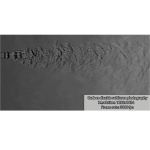




High-speed cameras are fundamental tools for analysing the dynamic behaviour of ball mills, which are used in various industrial sectors, such as the production of ceramic materials, minerals and paints. These mills operate at high speeds, and the grinding process involves complex dynamics that are difficult to observe in real time. High-speed cameras, capable of recording thousands or millions of frames per second, make it possible to observe in detail the behaviour of the balls, the movement of materials and the interaction between the various mill components.
Dynamic behaviour analysis
The dynamic behaviour of a ball mill depends on the rotation speed, the material load and the type of balls used. In a ball mill, balls made of steel or other materials are rotated inside a cylinder, creating an impact movement that crushes the material to be ground. This process generates vibrations and complex forces that affect grinding effectiveness. High-speed cameras are used to study these movements and optimise operating parameters, such as rotation speed and ball shape, in order to improve process efficiency.
Defect detection and process optimisation
High-speed cameras make it possible to monitor and record events that occur very rapidly, such as contact between the balls and the material to be ground. In particular, it is possible to analyse how the balls behave inside the mill, how they accumulate or disperse during the process and how the rotation speed affects grinding. Thanks to these observations, process defects can be identified, such as ineffective ball dispersion or ball jamming. In addition, high-speed analysis helps determine the effectiveness of the interaction between balls and material, providing useful data for optimising the material load and mill speed.
Another important aspect that can be observed in slow motion is the distribution of impact force between the balls and the material to be crushed. High-speed cameras make it possible to analyse these impacts with incredible precision, allowing engineers to adjust operating parameters to obtain the best grinding results while reducing energy consumption.
Monitoring vibrations and forces
The vibrations generated by ball mills during operation can have a significant impact on their efficiency. High-speed cameras make it possible to monitor these vibratory movements, helping to better understand how vibrations affect grinding efficiency and how to minimise the effects of harmful or irregular vibrations. In particular, analysing these vibrations reduces the risk of damage to mill components, such as bearings or motors, improving service life and reducing maintenance costs.
Sectors of application
High-speed cameras are used in various sectors that employ ball mills, including:
- Mining industry: in ball mills for grinding minerals, dynamic analysis helps optimise the crushing process, improving the quality of the final product.
- Ceramics industry: in the production of ceramic materials, high-speed analysis makes it possible to improve grinding efficiency to obtain a fine, uniform ceramic powder.
- Paint and ink production: ball mills are used for grinding pigments. High-speed cameras help optimise the quality and consistency of finished products.
- Food industry: in applications such as grinding cocoa, sugar and other food powders, high-speed cameras provide precise control of the grinding process.
Conclusion
High-speed cameras play a crucial role in analysing the dynamic behaviour of ball mills, providing detailed information on how the balls interact with the material to be ground. Thanks to the ability to observe the process in slow motion, it is possible to detect defects, optimise operations and improve the overall efficiency of the mill. The use of these cameras in sectors such as mining, ceramics and food helps improve the quality of the final product, reduce operating costs and increase the service life and reliability of equipment.
Video documentation
 Vuoi un aiuto nella scelta del prodotto ?
 Copyright by RODER SRL – Oglianico (TO) – Italy
Website: www.roder.it
Machine vision division: www.rodervision.com
Measuring instruments division: www.innovacheck.com