





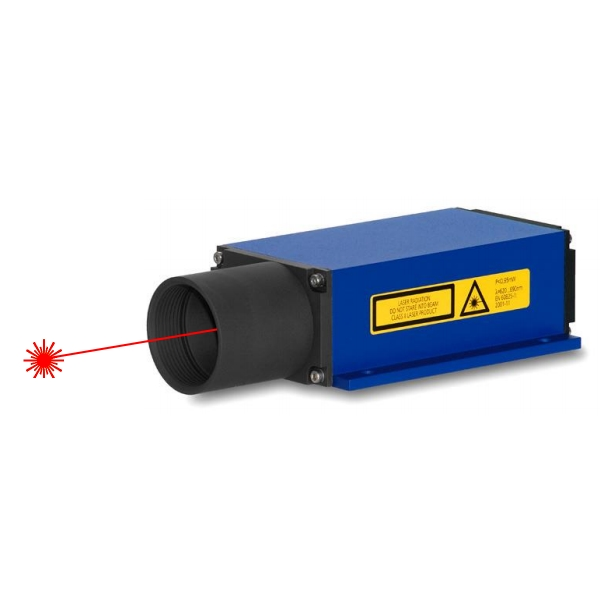
Automation and plant engineering
Machine builders and integrators: sensors and measuring systems for in-line integration, inspection stations, data acquisition and connection to PLC and MES.
On this page: the RODER products and systems used in the sector and the applications and news published. The quantities to be inspected are described, by physical quantity, in the Inspection section.
On this page
RODER products and systems for the sector ↑ up
The RODER families most used in this sector: Laser sensors, VLM optical encoders, PCL stations, HANDYBOX, EDAC, DATASINK. Each card links to the corresponding catalogue or in-depth page.
RODER · LASER distance meters Industrial LASER distance meters The industrial LASER distance meters distributed by RODER measure distance, position, level and displacement without contact, from a few centimetres up to 3000 m. The…

Non-contact velocimeters and optical encoders for precise speed and length measurement in continuous industrial processes. Optical encoder velocimeters measure the speed and length of materials in…

RODER · Systems RODER machine vision systems — all-in-one stations for in-line quality control RODER machine vision systems are “all in one” systems for…

Embedded computer in an industrial enclosure. Suitable for quick moves and easy reconfiguration. Wall or table mounting. The HANDYBOX series of industrial computers has been designed for use…
The RODER EDAC and UDAC family is a family of analog and digital I/O modules with Ethernet and USB interfaces that allows users to acquire, process, store and…

Data acquisition and process control software for industrial automation. DATASINK 100© Single-channel data acquisition software for acquisition from individual measuring instruments Data acquisition from: calipers, micrometers,…
Applications and news: Automation and plant engineering ↑ up
-
Distance and position measurement with industrial laser rangefinders
Industrial laser rangefinders provide precise distance and position measurement, ideal for applications in automation, logistics and manufacturing. Thanks to non-contact technology, they…
-

Using LASER rangefinders for position and distance measurement
Applicazioni correlate : Level measurement with LASER rangefinders and display on giant screens Distance and position measurement with laser distance meters Distance…
-

Level measurement with LASER rangefinders and display on giant screens
Level monitoring with laser rangefinders provides precise, reliable measurement for liquids and bulk materials. Display on giant screens ensures immediate, centralized control,…
-

Non-contact speed and length measurement with optical instruments
Laser speed sensors for measuring the position and speed of continuous materials, directly on the production line, even on hot or high-speed…
-

Length and position measurement for easily deformable profiles
Length measurement systems for easily deformable materials such as rubber gaskets, polystyrene profiles, seals, textile products and expanded polyurethane. A laser pointer…
-
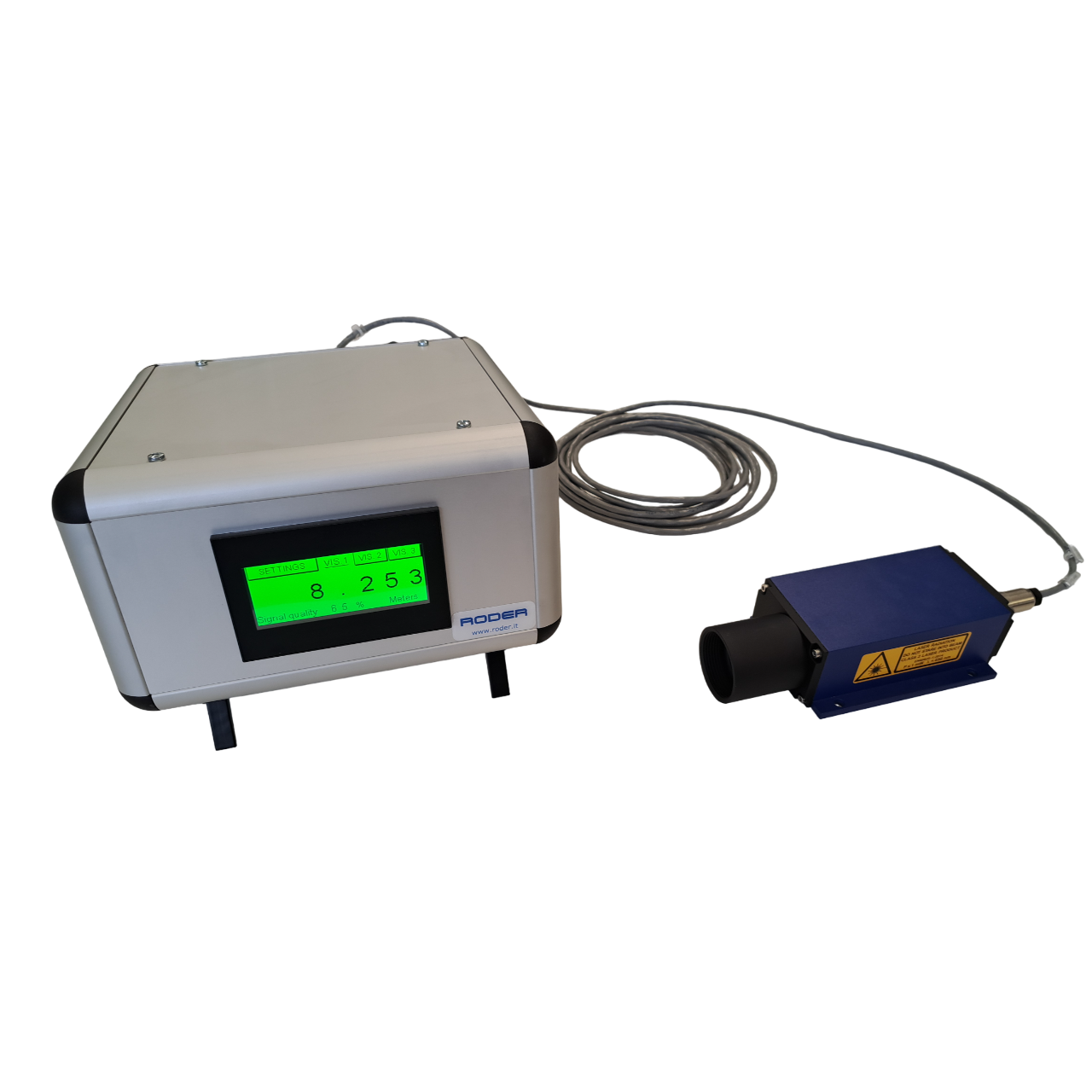
Application Kit for using LDM42 industrial LASER distance meters
The AK1 Kit is an effective, practical solution for using industrial LASER distance meters. The product, based on the LDM42 LASER distance…
-

Ultrasonic measuring instruments for thickness measurement
A practical guide to choosing an ultrasonic thickness gauge: thickness range, type of material, presence of coatings, accuracy and traceability. A comparison…
-

Measuring the diameter and ovality of tubes, wires and cables on the production line
In industrial production, the precise measurement of the diameter and ovality of tubes, wires and cables is crucial in ensuring the quality…
-

Systems for measuring the position, displacement and deformation of large structures
Systems for measuring the position, displacement and deformation of large structures use advanced technologies such as strain sensors, GPS and laser scanning.…
-

Instruments for measuring large diameters, angles and inclinations
The Roder range of measuring instruments is designed for the precise measurement of large diameters, angles and inclinations. We offer state-of-the-art solutions…
-

Automatic inspection cells for measuring the diameter and ovality of parts produced on machining centres
Automatic inspection cells for measuring diameter and ovality ensure precision and speed in the dimensional inspection of components produced on machining centres,…
-

Level measurement in tanks, silos or large containers with level display on remote monitors
Level measurement in large tanks, silos and containers with remote monitoring ensures precision and continuous control. Advanced systems allow real-time display on…
← All news · Inspection by quantity · Systems · Products
In depth: Automation and industrial process ↑ up
In industrial automation and process control, a reliable speed and length measurement is the basis for synchronising drives, controlling cutting and documenting production. ASTech velocimeters and optical encoders provide this measurement without contact, integrating easily into existing automation systems.
This section brings together solutions for in-line measurement and process automation. For the technical principles, please refer to the Technologies section; the other application areas are covered in Steel and metals, Paper, printing and converting and Wood, furniture and flooring.
Measurement as the basis of automation
An automation system is only as reliable as the data it is based on. The speed and length of the material feed critical functions such as cut-to-length, piece counting, synchronisation between rollers and drives, and the control of continuous processes. If this data comes from a measuring wheel subject to slippage and wear, the entire control chain suffers. A non-contact optical measurement, by contrast, provides a stable reference that is repeatable over time, on which the automation system can rely.
The VLM500 offers high speed and high accuracy (up to 50 m/s, uncertainty < 0.025 %), while the VLM60 replaces measuring wheels directly and measures down to 0 m/s, making it ideal for slow movements with frequent starts and stops.
Solutions for process automation
Optical solutions apply to a wide range of continuous and discrete processes, from in-line measurement to the synchronisation of conveyors and drives. The dedicated page examines non-contact measurement directly on the production line in more detail.

In-line non-contact measurement
Speed and length measurement directly on the production line.
VLM500 optical speed meters
Speeds up to 50 m/s, uncertainty < 0.025 %, CCD spatial filter.

VLM60 optical encoder
A replacement for measuring wheels, measuring down to 0 m/s.
Advantages for automation
- A stable, repeatable speed and length reference
- Encoder, analogue and fieldbus outputs for easy integration
- Fast update time for control loops
- No wear: reliable data in continuous operation
- Direct replacement for measuring wheels and rotary encoders
Integration with PLCs and fieldbuses
ASTech instruments provide A/B incremental encoder outputs, an analogue current output and the main industrial fieldbuses, such as Profibus DP, Profinet IO and EtherNet/IP. Integration with PLCs, drives and supervisory systems is consequently simple and standardised. In many cases the optical speed meter directly replaces a measuring wheel or a rotary encoder, replicating its signal: the technology upgrade therefore does not require the control architecture to be redesigned.
The update time of less than one millisecond also makes the signal suitable for the fastest control loops, where the responsiveness of the data affects the quality of the control.
Reliability and availability
In an automated plant, availability is everything. The absence of contact parts eliminates wear and periodic maintenance, while the IP 65 protection rating ensures reliability in industrial environments. The measurement consequently remains stable over time and unplanned downtime is reduced. Ultimately, the optical solution improves the quality of process control and lowers the total cost of operation, with a rapid return on investment. RODER technical support assists the customer in choosing the model and in integration.
Recommended products
VLM500 optical speed meters
Speeds up to 50 m/s, uncertainty < 0.025 %, CCD spatial filter.
VLM60 optical encoder
A replacement for measuring wheels, measuring down to 0 m/s.

Optical encoder speed meters
Overview of the optical speed meter and encoder family.
Sectors and processes served
Optical speed and length measurement is used across the board in automated processes: continuous rolling lines, converting, woodworking, plastics and rubber extrusion, cable and pipe production. In all these cases the optical speed meter provides the speed reference on which the automation system builds its own control loops. The same technology consequently becomes a standard component of process automation in very different sectors.
LED light and safety
ASTech instruments use white LED illumination, not laser. This removes the safety requirements typical of higher-class laser systems and simplifies installation in environments where operators are present. The absence of coherent light also avoids speckle, improving measurement stability on irregular surfaces. For this reason the solution is particularly suited to automation cells and attended lines.
Scalability and standardisation
Adopting a single measuring principle across several lines and processes makes it possible to standardise spare parts, procedures and skills. From the point of view of scalable automation, this reduces complexity and indirect costs and speeds up adoption on new plants. The data, available on encoder, analogue and fieldbus outputs, integrates uniformly into the various control systems.
From measurement to control
In automation, the value of a measurement lies in the actions it enables. A reliable speed makes it possible to trigger shears at exactly the right instant, keep the ratios between drives constant and regulate continuous processes without drift. Optical measurement, stable and responsive, provides this reference for the whole life of the plant, without the wear that affects contact-based solutions. RODER technical support assists the customer from the choice of model through to commissioning and integration with the control system.
Frequently asked questions
Why use optical measurement in automation?
Because it provides a stable, wear-free speed and length reference on which to base cutting, counting and synchronisation, improving the reliability of the control.
How does it integrate with the PLC?
Through incremental encoder outputs, an analogue output and fieldbuses (Profibus DP, Profinet IO, EtherNet/IP), compatible with existing automation systems.
Can I replace a rotary encoder or a measuring wheel?
Yes. The optical speed meter replicates the encoder signal, so it directly replaces measuring wheels and rotary encoders without redesigning the control.
Is the signal suitable for fast control loops?
Yes. The update time of less than one millisecond makes the data suitable even for the fastest control loops.
Which model should I choose?
The VLM500 for high speed and high accuracy; the VLM60 for low speeds, starts/stops and the direct replacement of measuring wheels.
Monitoring rotational speed
In addition to measuring the speed and length of materials, process automation includes RPM monitoring of rotating machinery. Stroboscopes measure rotational speed without contact and allow moving parts to be inspected, for process control and predictive maintenance.
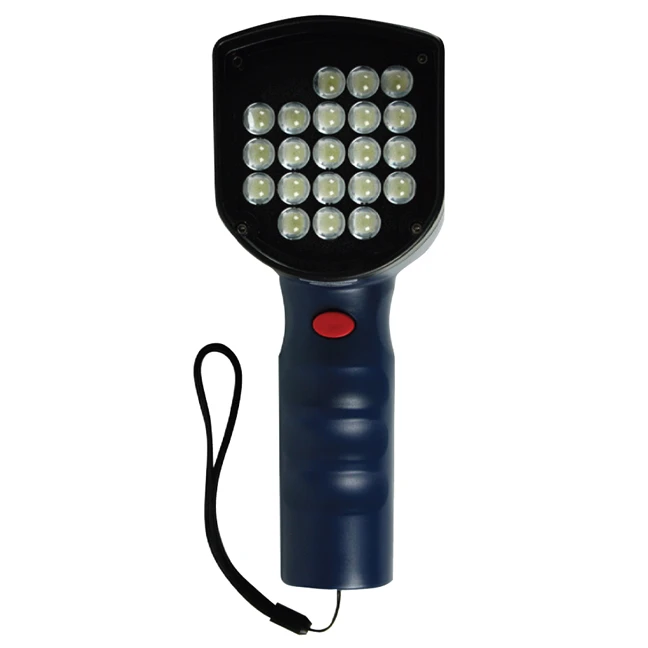
RPM and machine rotational speed monitoring
Non-contact RPM measurement with a stroboscope: process control and predictive maintenance.
The information on this page is provided for information purposes. Although it has been compiled with the greatest care, it may contain transcription errors or typos: for precise, up-to-date information please contact RODER SRL directly.
Contacts & Information
Contact for general information : info@roder.it
Machine Vision Division of RODER : www.visiotronix.com
RODER Instruments Division : www.innovacheck.com
More about RODER : about us
The information contained in this website is provided for information purposes only. Although it has been prepared with the greatest care, it does not constitute a contractual offer or a binding commitment to supply. It may contain transcription, translation or typographical errors. For precise and up-to-date information, please contact our company directly.
Note: Some images on this website have been intentionally generated using artificial intelligence (AI). This is because, for many applications and projects, photographs of the actual installation or system cannot be disclosed owing to confidentiality agreements, contractual clauses and non-disclosure agreements (NDAs).
You must be logged in to post a comment.