





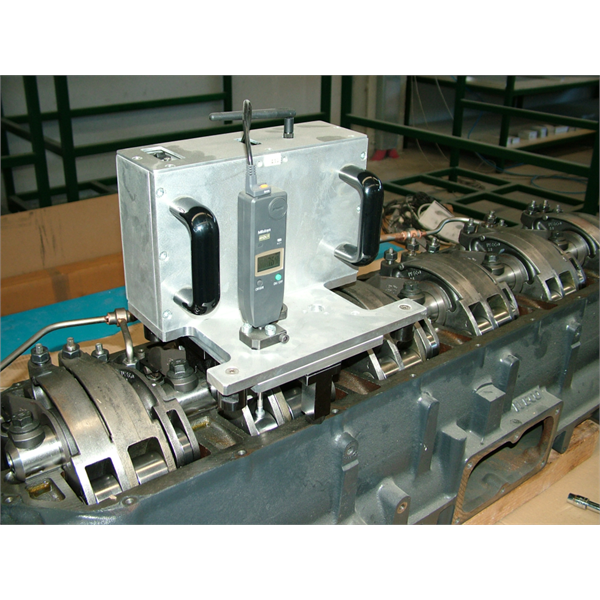
Timing inspection on camshafts is a crucial element in ensuring the correct operation of internal combustion engines. Advanced measurement and verification systems make it possible to detect any anomalies, improving product quality and engine efficiency.
The importance of camshaft timing
Camshaft timing directly affects engine performance, determining the correct operation of the intake and exhaust valves. Timing errors can lead to reduced efficiency, greater wear of components and potential failures.
Technologies for timing inspection
Modern technologies for timing inspection include the use of optical sensors, LASERs and machine vision systems. These instruments allow precise, rapid analysis during the production process.
Non-contact measuring systems
Non-contact measuring systems, such as LASER scanners and high-resolution cameras, are particularly suitable for inspecting camshafts, guaranteeing precision and speed without damaging the components.
Parameters analysed in timing inspection
The main parameters checked include:
- Valve opening and closing angles.
- Synchronisation between camshaft and crankshaft.
- Cam profile, to ensure uniformity.
Software for data processing
Modern timing inspection systems are supported by advanced software capable of analysing the data collected and comparing them with the theoretical values. This process makes it possible to detect any deviations in real time.
Applications in production environments
Timing inspection is particularly important in production lines for car, motorcycle and industrial engines. In-line verification ensures that every component meets the required specifications.
Benefits of automation in timing inspection
Automating the inspection processes reduces inspection times, minimises human error and guarantees consistent results, improving production efficiency.
Integration with machine vision systems
Integration with machine vision systems makes it possible to detect visual anomalies, such as micro-deformations or premature wear, that could compromise the timing of the camshaft.
Scrap reduction and quality improvement
Accurate inspection makes it possible to identify non-conforming components before they are assembled in the engine, reducing scrap and improving the overall quality of the product.
Regulations and quality standards
Timing inspection must comply with international quality regulations and standards, ensuring that the components produced are safe, reliable and efficient.
Real-time timing inspection
Thanks to in-line systems, timing inspection can be carried out in real time during production, minimising downtime and ensuring higher productivity.
High-precision sensors for timing
The sensors used for timing inspection include optical and magnetic transducers, capable of detecting even the smallest deviations. Precision is essential for such critical components.
Comparison between traditional and modern techniques
Traditional inspection techniques required long times and manual intervention, whereas modern automated systems offer greater precision and much faster processing.
Operator training and expertise
Despite automation, it is essential to train operators to interpret correctly the data provided by the inspection systems and to intervene when necessary.
Innovations in timing inspection
The most recent innovations include the use of artificial intelligence for predictive analysis, which makes it possible to prevent errors and further optimise the production process.
Reduced operating costs
Adopting advanced systems for timing inspection makes it possible to reduce operating costs, thanks to greater efficiency and a decrease in scrap and repairs.
Contribution to sustainability
Precise timing inspection reduces environmental impact, improving engine efficiency and reducing emissions. This aspect is particularly important in the context of increasingly stringent regulations.
Challenges and solutions in timing inspection
The main challenges include handling complex components and the need to integrate the inspection systems with existing production lines. Solutions such as modular automation and flexible sensors can overcome these difficulties.
Conclusions
Systems for timing inspection on camshafts are a fundamental component in guaranteeing quality, efficiency and reliability in modern engines. Thanks to the use of advanced technologies, excellent results can be achieved, reducing costs and improving overall performance. Adopting these systems is a strategic investment for any company operating in the automotive sector or in industrial applications.

Would you like help choosing the right product ?
Copyright by RODER SRL – Oglianico (TO) – Italy
Website: www.roder.it
Machine vision division: www.rodervision.com
Measuring instruments division: www.innovacheck.com
Vision division · VISIOTRONIX
LED illuminators for machine vision are on visiotronix.com
VISIOTRONIX (formerly RODER VISION) brings together the Photolux range used in applications like this one: bars, rings, backlights, flat domes and spots, with datasheets, part numbers and a guide to choosing the right lighting. The starting point remains the roder.it page Machine vision and LED illuminators.
Applicazioni correlate :
 Systems for checking timing and top dead centre height on the production line
 Machine vision systems for integrity inspection, OCR recognition and dimensional inspection on the production line
 Automatic systems for dimensional inspection of parts machined on CNC machining centres
 Defect inspection of blanked and bent metal parts using machine vision systems
 Backlight profile inspection vision systems
You must be logged in to post a comment.