






Manual fixtures with contact probes are a reliable, precise solution for the dimensional and geometric inspection of mechanical components. Ideal for use in production environments, they are easy to use, deliver accurate results and adapt to different industrial requirements.
Operating principle
These fixtures use contact probes that detect dimensional and geometric variations through a direct measuring mechanism. The probes rest on the surface of the component, detecting differences with micrometric precision.
Materials and construction
Made from durable materials such as stainless steel and special alloys, manual fixtures ensure durability and reliability even in harsh operating environments. The probes are often interchangeable to suit different applications.
Main applications
Manual fixtures are used in sectors such as automotive, aerospace, machinery manufacturing and precision machining. They are used to verify tolerances on complex components such as shafts, gears and bushings.
Advantages of manual inspection
Manual inspection allows operators to take direct, intuitive measurements with immediate feedback. This approach is ideal for small-scale production or quick checks during the production process.
Types of contact probes
There are various types of contact probes, such as those with spherical or cylindrical tips and with custom profiles. Each type is designed for specific measuring requirements.
Accuracy and reliability
Thanks to advanced technology, contact probes can detect dimensional variations with a precision of up to one micron. This reliability makes them fundamental to quality control.
Integration with other instruments
Manual fixtures can be used in combination with other measuring instruments, such as digital callipers or optical comparators, for more in-depth verification.
Portability and ease of use
The light weight and portability of manual fixtures make them ideal for on-site checks, directly on the production line or in the assembly department.
Maintenance and longevity
Maintenance of the fixtures is simple, requiring only regular cleaning and periodic replacement of the probes, ensuring a long service life.
Comparison with automated systems
Compared with automated systems, manual fixtures offer greater flexibility and lower initial costs, making them a sound choice for companies with limited budgets.
Fields of application
From vehicle component production to the manufacture of surgical instruments, these fixtures are used in a wide range of industries thanks to their versatility.
Standards and certifications
Many manual fixtures meet international quality standards such as ISO 9001, ensuring compliance and traceability in measurement processes.
Practical example
An automotive company uses contact probes to check piston roundness during the production process, ensuring compliance with the required specifications.
Operator training
Manual fixtures require minimal training, so operators quickly become independent in using them and reading the data.
Operational challenges
One of the main challenges is the need for precise manual handling, which depends on the operator’s skill. However, ergonomic fixtures reduce the risk of errors.
Technological innovations
The latest innovations include contact probes with electronic feedback and wireless connections, enabling integration with digital systems for advanced data analysis.
Scrap reduction
Using these fixtures helps reduce production scrap by promptly identifying out-of-tolerance components and improving overall product quality.
Conclusions
Manual fixtures with contact probes are an indispensable tool for dimensional and geometric inspection in modern production processes. Their precision, ease of use and reliability make them an essential solution for ensuring quality and competitiveness in the most demanding industrial sectors.
 Vuoi un aiuto nella scelta del prodotto ?
 Copyright by RODER SRL – Oglianico (TO) – Italy
Website: www.roder.it
Machine vision division: www.rodervision.com
Measuring instruments division: www.innovacheck.com
Applicazioni correlate :
 3D CMM measuring systems for the automatic inspection of dimensional and geometric characteristics on the production line
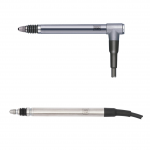 LVDT linear transducers for dimensional and geometric inspection
 Machine vision systems for integrity inspection, OCR recognition and dimensional inspection on the production line
 Dimensional inspection benches for small shafts, gears and pulleys
 Systems for dimensional inspection of drawn, extruded or welded tubes directly on the production line