





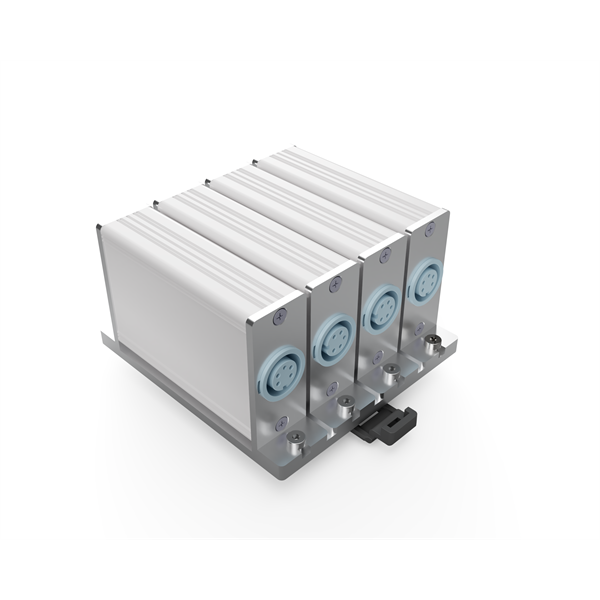
Digital linear transducers and LVDTs (Linear Variable Differential Transformers) are fundamental instruments for the dimensional and geometric inspection of mechanical parts, ensuring precise and repeatable measurements in complex industrial applications.
The role of linear transducers in quality control
Linear transducers make it possible to measure displacements and dimensions precisely, helping to meet the required tolerances and improving real-time quality control.
Main features of linear transducers
These devices offer high resolution, reliability and robustness, even in difficult working conditions. Their precision makes them suitable for monitoring critical components.
How LVDT transducers work
LVDTs exploit the principle of electromagnetic induction to measure linear displacements. Their design, with no internal mechanical contacts, ensures long service life and resistance to wear.
Differences between digital transducers and LVDTs
Digital transducers convert movement into digital electrical signals and are ideal for automated systems. LVDTs, on the other hand, offer greater robustness and are perfect for heavy-duty industrial applications.
Advantages of transducers in dimensional inspection
Using transducers reduces the margin of error, ensures constant monitoring and makes it possible to detect dimensional or geometric defects in real time.
Industrial applications
Linear transducers are used in sectors such as automotive, aerospace, machinery manufacturing and hydraulic systems, ensuring reliable measurements in complex production environments.
Integration with production systems
Thanks to their versatility, transducers can easily be integrated with machinery and analysis software, improving the efficiency of production processes.
Data processing software
The data collected by the transducers are analysed in real time by dedicated software, which provides detailed information on the dimensional and geometric characteristics of the components.
Continuous and predictive monitoring
Integrating transducers with continuous monitoring systems makes it possible to anticipate problems, avoiding machine downtime and improving operational efficiency.
Adaptability to complex materials and geometries
Transducers can be used to inspect different materials, such as metals, plastics and ceramics, and to analyse complex shapes or surfaces that are difficult to measure.
Resistance to difficult operating conditions
Thanks to their robustness, transducers withstand extreme conditions such as high temperatures, vibration and corrosive environments.
Technological evolution
The latest innovations include transducers with wireless capability, higher resolution and integration with artificial intelligence technologies for more advanced inspection.
Cost efficiency
Adopting transducers reduces operating costs thanks to less scrap and improved production times.
Operator training
Using transducers requires minimal training thanks to intuitive interfaces and automatic calibration systems.
Compliance with international standards
These devices meet the highest quality standards, such as ISO 9001, ensuring reliability and traceability of production processes.
Integration with Industry 4.0
Transducers fit seamlessly into modern production systems, facilitating interconnection between machines and remote monitoring.
Reduction of human error
The automation offered by transducers eliminates most human errors, ensuring consistent and precise results.
Case study
A company in the automotive sector implemented digital transducers for the dimensional inspection of its components, achieving a 30% increase in measurement precision and a 20% reduction in scrap.
Conclusion
Digital linear transducers and LVDTs are an indispensable solution for dimensional and geometric inspection in modern production processes. Thanks to their precision, versatility and reliability, they are key instruments for ensuring quality and competitiveness in industry.
 Vuoi un aiuto nella scelta del prodotto ?
 Copyright by RODER SRL – Oglianico (TO) – Italy
Website: www.roder.it
Machine vision division: www.rodervision.com
Measuring instruments division: www.innovacheck.com
Applicazioni correlate :
 LVDT linear transducers for dimensional and geometric inspection
 Dimensional checks with multi-gauging units and LVDT linear transducers
 Manual fixtures for dimensional and geometric inspection with contact probes
 Automatic systems for dimensional inspection of parts machined on CNC machining centres
 Machine vision systems for defect inspection on mechanical and electronic parts